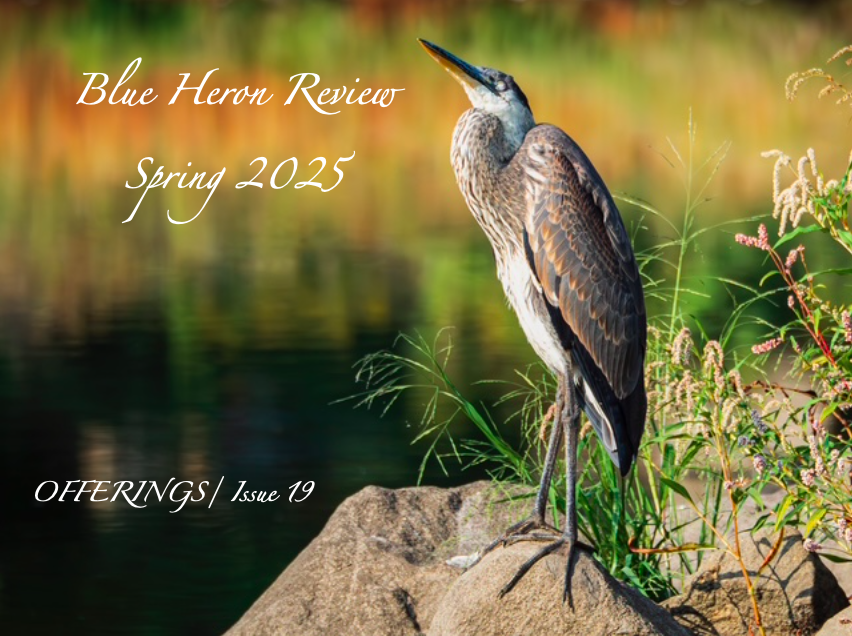
(*Cover artist credit: Karren Jeske)
OFFERINGS
CONTRIBUTORS:
Poets:
Helen Bournas-Ney * Isaac James Richards * Colette Tennant * CMarie Fuhrman * Giles Goodland * Emily Tee * Arvilla Fee * Pat Phillips West * Fred Briggs * Eileen Pettycrew * Lisa Wiley * Tara Menon * Elena Quinones * Melissa Mitchell * Lori Ulrich * Alice Foxall * Jim Landwehr * Carol Mikoda * William Rudolph * Cortney Davis * Amrita Skye Blaine * Lynette Reini-Grandell * Caitlin Gemmell * John Davis * Laura Barr * Mary Anna Scenga Kruch * Faith Paulsen * Katrina Serwe * Tricia Knoll * Sandra J Lindow * Carol Alena Aronoff * Anita Pinatti
Artists:
Karren Jeske (cover artist) * Michael Jeske * Jeannie E Roberts * Kai Coggin * Donna Hilbert
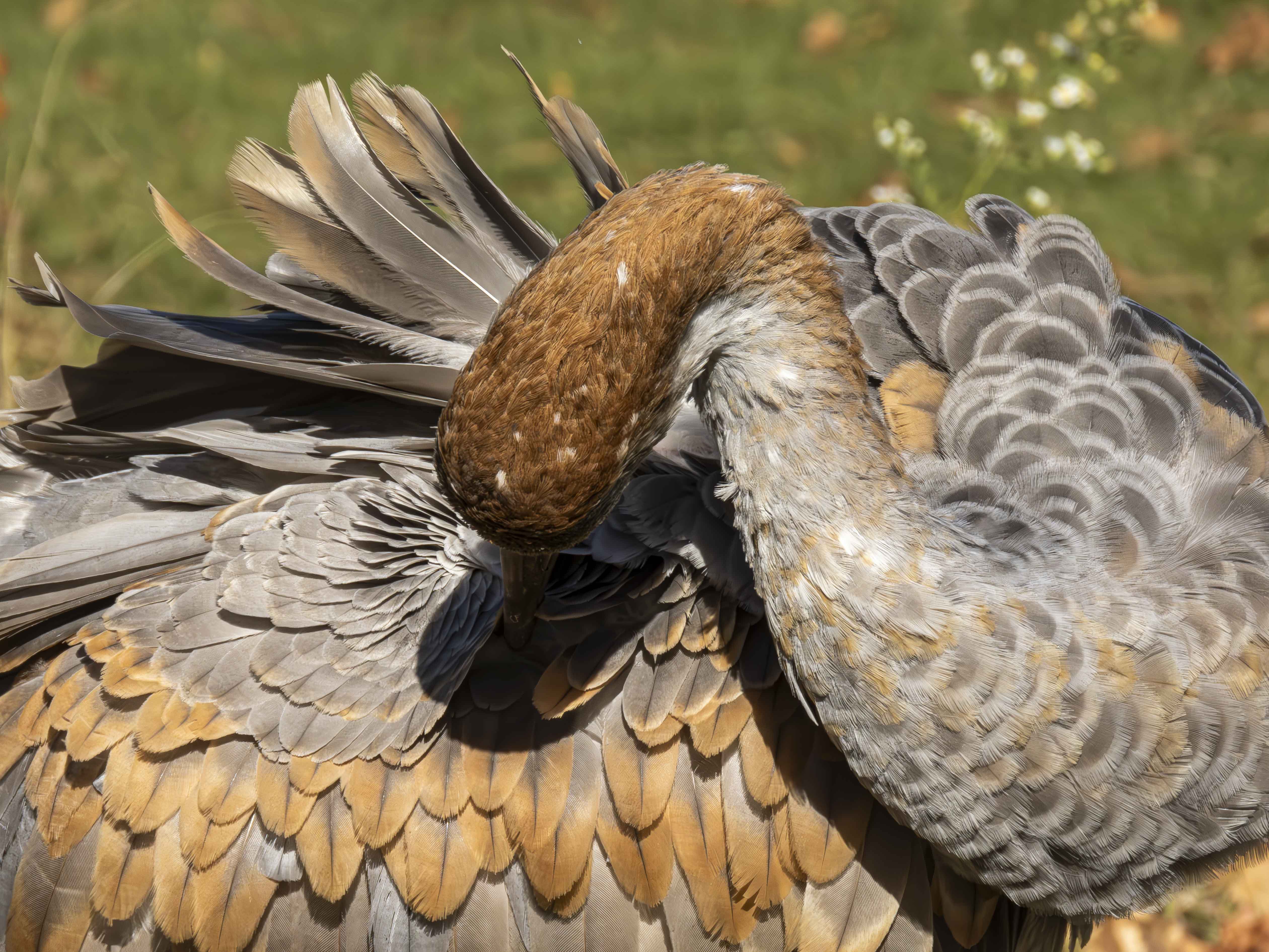
(*Artist credit: Karren Jeske)
HELEN BOURNAS-NEY
A Prayer for My Granddaughter
Rocking softly in a simple sea, cradled
in your first house now, departure
and arrival set for mid-July. Celebration
in the open windows and the open gates
in the house, the arms, that will receive you.
Soon you will be crawling through a nursery
door; or later, maybe seeking out
a dreaming alcove where one stops
for solitude, or listens with a sole intent
to rustlings of a book (its pages flying)
that whispers to you who you are. And should
you have a nesting doll—a house that houses
other houses, a self that opens richly to reveal
one more, and one more—may you take pleasure
in the colors and the shine of every layer,
and in your playing reach, and revel in
its unimpeachable and solid core.
Helen Bournas-Ney is a Greek-American poet born on the remote island of Ikaria. Her work has appeared in Plume (both online and in the Plume Poetry Anthology 7), The Ekphrastic Review, Blue Heron Review, and Ergon Greek/American Arts and Letters. Her poetry was nominated for Best of the Net and was heard on NPR’s Morning Edition for National Poetry Month 2023 and 2024. She has just completed her first collection of poems, Just Like the Sky, but Nearer; some of her work can be found at helenbournas-neypoetry.com.
ISAAC JAMES RICHARDS
What Paul Said Jesus Said About Giving and Receiving
I stole silence from sunrise, took breath away
from sky, fished meaning from clouds. I took
milk out of the fridge, the dog for a walk, the kids
to school. I subtract space from sourdough, leave
air bubbles, pockets of wheat-smell, small. I swing
the door away to give it freedom, take and give,
lock it up again. Rain—perhaps the best image
for our paradox. Do clouds give? Earth receive? I know.
I’ve been kissed by a wet-nosed toddler’s open mouth.
Isaac James Richards is a PhD student at Penn State and a contributing editor for Wayfare Magazine. He has been nominated for the Pushcart Prize, Best Small Fictions, and other awards. His most recent work appears or is forthcoming in Aethlon, EcoTheo Review, LIT, and OxMag. Find him online at https://www.isaacrichards.com/
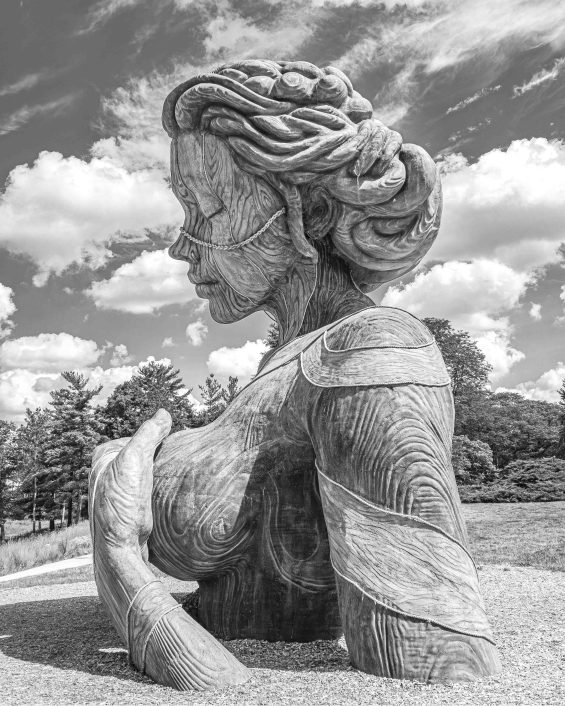
(*Artist credit: Karren Jeske)
COLETTE TENNANT
My Students’ Names—an Offering
One in the back row loves her name
for how it’s spelled—
Sophiya.
I love it too—
how the “y” makes it tender.
One with the last name Shepherd
notices how people misspell it.
That shouldn’t happen, especially
since he works security every night,
walks under the cold winter stars
watching over our campus.
But one told the class
her parents named her
after a lost child poster.
That silenced the room.
I know from her papers, she’s
had a rough life.
A middle school bully
pretended to be her friend all summer,
then on the first day of school,
spit on her in front of the in-crowd.
I want to offer her something,
to remind her that her lost-child name
means high, noble, exalted.
Her name goes back to Brian Boru,
Ireland’s high king, who
freed his people from the Vikings.
I want to circle her front row seat
with cherry blossoms.
I want to take a scrolled ancient spoon,
gold as every blessed tomorrow,
fill it with holy water, and
christen her queen.
Colette Tennant has three books of poetry: Commotion of Wings, Eden and After, and Sweet Gothic. Her book, Religion in The Handmaid’s Tale: a Brief Guide, was published in 2019 to coincide with Atwood’s publication of The Testaments. Her poems have won various awards and have been nominated for Pushcart Prizes along with being published in various journals, including Prairie Schooner, Rattle, and Poetry Ireland Review. Colette is an English and Humanities Professor who has also taught art in Great Britain, Germany, and Italy.
CMARIE FUHRMAN
Freshwater
If the gods bring to you
concrete
and promise light
what will you offer in return?
We gave them salmon. 12000
in one day. We laid them
at the base of the dam
and walked away.
I have been to this offering
place. A stagnant reservoir
now covers the altar
and cars that carry
faces by are machines
made to move us quickly
past regret. At home
the domestic is comfort
time is clocked on a dial
in kilowatt hours and we
tithe what they ask us
without thinking of fish.
What is the difference
between sacrifice and offering?
I asked this of the gods
while standing beneath
Oxbow dam. Hush girl,
they replied, and I understood
finally, that only a few of us
still feel the presence of gills.
CMarie Fuhrman is the author of Salmon Weather, Camped Beneath the Dam: Poems and co-editor of Cascadia: Art, Ecology, and Poetry and Native Voices: Indigenous Poetry, Craft, and Conversations. She has published or forthcoming poetry and nonfiction in multiple journals and anthologies. CMarie is an award-winning columnist for the Inlander and Director of the Elk River Writers Workshop. She is Associate Director of the Graduate Program in Creative Writing at Western Colorado University, where she teaches poetry and nature writing. CMarie is the host of Terra Firma. She resides in the Salmon River Mountains of Idaho with dogs and wilderness.
GILES GOODLAND
On Driving My Mother Home, After Giving a Talk on the Exmoor Dialect
I help her into the car in the rain, checking
she stows her walking stick
then leaving North Molton, I misturn, end up
on the wrong side of the moor. Totherway,
she says. No matter, I like it in the car and
now we have the right way, up to where
the mist sits we think of the words I’d named,
howdering and boldery, only book-words for me.
Without hedges, the mist encloses:
we push through blank space as if not moving at all.
Perhaps she’s proud of her book-body son.
I don’t know. I turned to words after I
moved away. Now we don’t speak of feelings.
She enjoyed talking to other dialect-speakers
not one of them under 70, and was lively, but when
tired something fogs inside her, like the windscreen
blade wiping and squeaking, perseverating
asquiff, askew, nothing to see,
not the sheep looming skewways, skew-whiff.
I was hoping for her to recognise a place-name
but nothing sparks, there’s a vacancy.
I suggest I-spy, and she unironically
resumes a routine from 50 years before:
she in the driving seat, same road,
most Sundays to or from the farm, the parental
agenda, I now see, being to stop
the fighting on the back seat, and she moves
fluidly back into thinking what might begin with A.
On Dunkery, air clears for a moment. What
is moving the distant trees so violently.
Buzzard forms inside me. By a slight
gesture it commands the sky. Her turn, for miles.
I miss how she’d give us a dish of tongues. The nouns
go first. Something beginning with M.
Giles Goodland’s books include Of Discourse (Grand Iota 2023), A Spy in the House of Years (Leviathan, 2001), Capital (Salt, 2006), Dumb Messengers (Salt, 2012), and The Masses (Shearsman, 2018). Civil Twilight was published by Parlor Press in 2022. He has worked as a lexicographer, editor, and bookseller, and teaches evening classes on poetry for Oxford University’s department of continuing education, and lives in West London.
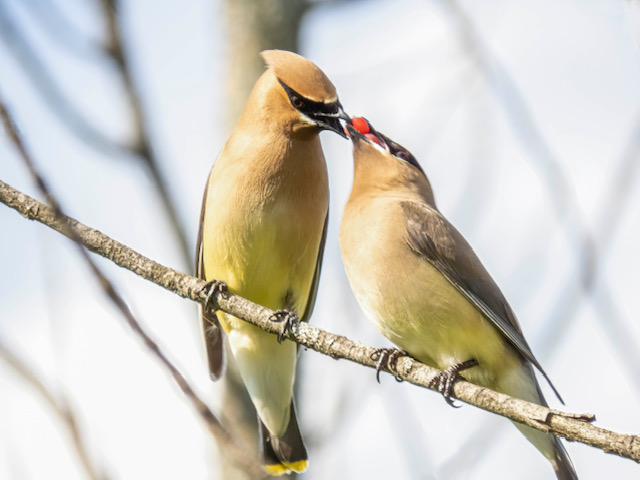
(*Artist credit: Michael Jeske)
EMILY TEE
At Times Like This
a Golden Shovel after “Lost” by David Wagoner
At times like this you wonder if you should take a stand,
so much at stake, so many important matters raging still.
Can you solve the problems of this country, or the
world? Perhaps we need to start small, in the forest
for example. Take ourselves there. Listen. Who knows
what answers we’ll find if we just stop, ears open—where
the woods whisper, where the winds sigh, and you
can hear the birds call and chatter. Nature says there are
bigger things going on. You are a part of it. You
matter. We all matter. None are too small. We must
keep going, keep believing in better. Do not let
all the troubles of the world grind you down. When it
becomes the time to help others, do that. When you find
it all too much, know that you are enough. Yes, even you.
Emily Tee writes poetry and flash fiction, much of which is ekphrastic or on the topics of society, nature, and the environment. She’s had recent pieces online in Ekphrastic Review Challenges and Green Ink Poetry and in print in The Winged Moon and The Belfast Review, among other places. Emily is also the judge of the regular ekphrastic poetry contest run by The Wee Sparrow Poetry Press. She lives in the UK.
ARVILLA FEE
Not My Grandmother
I gently take the withered hands
of the white-haired lady
who sits, shoulders hunched forward,
in her wheelchair.
Her faded cornflower-blue eyes
take me in, widening just a bit
in gleeful recognition.
Good morning, Claire, I whisper,
and she grins, displaying a few
vintage gold-capped teeth.
I have a secret, she whispers back,
and I lean forward to listen,
knowing this is one of her favorite
games—I took an extra pudding
from the food cart, she says.
I giggle and lightly touch her nose.
Good for you, you little devil.
Want to hear another secret? She asks.
I nod—and we sit like this for hours.
Her family thinks she’s lost,
too mentally out of it
to engage in conversation;
they only visit once a year.
But I come every week,
not out of obligation,
but because Claire is a gift
that should be unwrapped
more often than holidays.
Arvilla Fee lives in Dayton, Ohio and teaches English for Clark State College. She has published poetry, photography, and short stories in numerous presses, including North of Oxford, Rat’s Ass Review, Mudlark, and many others. Her poetry books, The Human Side and This is Life, are available on Amazon. Her third book, Mosaic: A Million Little Pieces, was published December 2024. Arvilla loves writing, photography and traveling and never leaves home without a snack and water (just in case of an apocalypse). Arvilla’s favorite quote in the whole world is: “It’s not what you look at that matters, it’s what you see.” —Henry David Thoreau. To learn more, visit her website: https://soulpoetry7.com/
PAT PHILLIPS WEST
A Great Fullness
When I answer the door, my neighbor stands
there, without a word, thrusts out a bag
of ripe Bartletts. Oh, all I manage to sputter
before he scurries away.
A man known around my neighborhood
as the old geezer.
Such an ornery cuss, I think to myself,
as I peel and chop, then stir,
as a warm alchemy transforms
the bubbling fruit into a thick sauce, a spread
called butter—for reasons no one knows.
I ladle the mixture into my mother’s
dark blue bowl.
Invisible roots pull me back in time
to another October, to a tree whose limbs
I remember as if they were my own.
A scruffy seven-year-old scrambling
to the highest branches, picking hard
green globes before an early frost.
A time we laid pages of the Chicago Tribune
on the wood plank floor in the empty bedroom
upstairs, the one heat from the oil burner
never reached. Where we spread the harvest—
unlike other fruits, pears taste best
when ripened off the tree.
A caustic crow out the kitchen window,
startles me back to here and now.
Aromatic incense of ginger and nutmeg
nearly replaces the oxygen in the room.
I lick the spoon—sweeten the bitter
on my tongue, and say thanks—
without adding a single adjective,
to my neighbor’s name.
Pat Phillips West’s work appears in various journals including: Blue Heron Review, Haunted Waters Press, San Pedro River Review, and elsewhere. She has received Best of the Net and Pushcart Prize nominations.
FRED BRIGGS
Intersection With Flowers
Small, five petal, white flowers
out over the small patch of grass beneath
the
Ped Xing sign. Crowded around the sign pole.
Smiling through the carbon fumes. Crossroads, cars, trucks,
more cars, cars
turning left, turning right. Or straight,
crossing
the perpendicular road. Asphalt,
concrete, steel signs, parking lots confining
nature to that small strip
between
them and
the roads. How many
people pass by here going to work, shopping, school,
doctors. Most don’t even see them,
the flowers, boxed in, steamed like vegetables by
the sun. Making do with little rain or
drowning in too much. No thought of flowers
while we were taming Mother Nature’s wildings. Surviving
as
best they can, they do it for
themselves.
It’s in their DNA to be
beautiful in a hostile world.
Fred Briggs is a graduate of Stony Brook University where he majored in English Literature with an emphasis on 17th Century poetry. An award-winning poet, his work has been published in several journals and online: The Main Street Rag, Street Cakes, and Of Poets & Poetry. See more of his poetry on Facebook: The Poet’s Cloak—The Poetry of Fred Briggs.
(*Artist credit: Jeannie E Roberts)
EILEEN PETTYCREW
Labor
The new widow next door invites me in
wearing the same gray turtleneck
she wore last time. Sometimes I think
I’m making things worse,
lending her a book of poems about loss.
She asks why is one poem a reckoning
and not a remembrance?
And some plain don’t make sense.
She’s tried listening
to the classical music station
like they used to—she whisking batter
for dutch babies, he frying bacon—
until a song comes on that she loves.
It’s a gift she doesn’t want
or is it a gift at all?
Call it the width of my driveway,
the bare spots in her grass.
By which I mean her grief
drifts through my window
and I breathe it in like smoke.
I mean somewhere at this very moment
someone is taking their first breath
and someone is taking their last
and I could live forever
in this stubborn air
and never know what happened.
How necessary the few steps
from my front door to hers.
She stands inside the yellow light
and welcomes me to her table,
where we sit and labor—
she and I each our own
impossible midwife,
breathing in, breathing out.
Eileen Pettycrew’s poems have appeared or are forthcoming in ONE ART, CALYX Journal, The Ekphrastic Review, and Cave Wall, among others. In 2022 she was one of two runners-up for the Prime Number Magazine Award for Poetry from Press 53, and a finalist for the NORward Prize for Poetry. Currently, she is pursuing an MFA at Pacific University. A Pushcart Prize nominee, Eileen lives in Portland, Oregon.
LISA WILEY
New Course Offering
—for Mary Karr
I offer my students your wounds,
your words, your re-memberings,
your Texas blue sky, your faith—vow
I might do them an ounce of justice—
you signed my copy of Liars’ Club
Kick butt in thick black Sharpie,
kissed Billy Collins full on the lips,
after we posed like Charlie’s Angels,
finger guns pointed in the air
at a Long Island workshop.
My students have scars,
man-of-war stories, gumption,
grit, family lore to share. Hope
they find solace in your pages—
learn they can write their way out
of any gut-wrenching, awful storm.
Lisa Wiley teaches English at SUNY Erie Community College in Buffalo, NY. She is the author of four chapbooks including Eat Cake for Breakfast, a tribute to Kate Spade (Dancing Girl Press, 2021.) Her work has appeared in Comstock Review, Earth’s Daughters, Journal of the American Medical Association, and SWWIM, among others.
TARA MENON
Snowflakes
They are like snow flurries
that give rise to butterflies in my stomach,
except they arrive in my email,
letting me know I have a new message
in my Lahey Health Chart.
It’s hard after the biopsy not to panic
whenever I log in to look
at the latest message that could be
about an appointment, a test result, or a letter.
Two beautiful snowflakes, each one distinctive,
arrived this week.
A kind letter from the nurse coordinator
informing me I could call
or message her with questions.
A letter from the surgeon
who had studied the MRI pictures of my chest.
One side is clear
and the other only shows cancer in a small area.
More reassuring words spill
and I refill my mind by reading them again.
These two snowflakes cheered me
as if they were real, landing on my face,
invigorating me with hope.
Tara Menon is an Indian-American writer based in Lexington, Massachusetts. She was a finalist for the Willow Run Poetry Book Award 2023/2024. Her latest poems have appeared in Adanna Literary Journal, Sheila-Na-Gig, Arlington Literary Journal, and A Plate of Pandemic.
(*Artist credit: Jeannie E Roberts)
ELENA QUINONES
Spring’s Neon Crease
Petals, pollens, leaves coat windows and lungs,
those filter screens to the insides of us.
I break open an acorn with a stick,
a blade of grass with my nail
finding unrefined neon lines
shaping meats of semi-fleshy beings.
Their fibers, sinew of the fields,
their tufts and peels, regenerative grounds,
our heads, compost centers among them
pressing relentless whispers into grass
where dream-space holds day-thought
as the bucket holds food scraps.
Elena Quinones lives and writes in Central Pennsylvania. She holds a BA in Latin American Studies from WashU and an MA in Comparative Literature from The Pennsylvania State University.
MELISSA MITCHELL
Unencumbered beasts
in the night like scattered moonlight
windswept clouds cast across
masses tumbling to the ground
skinning the earth—fresh snow—back
dark dirt across scars of white satin.
sounds like cloth
trumpeting the breeze
meant to dry
our cheeks
smell like sun
light touch here
away and back
away again.
are miracles like how
love doesn’t live in bodies
love lives in stories
in myths passed down mouth to mouth
to resuscitate the bitter
tongues back to life
away and back again.
are miracles like viscera
is bone on bone unfurling
marrow yawning
open with buds from last April
showers upon showers
to name abundance
as running in the opposite
direction of ruin.
are deer dawn fairy tales
lilting arcs into clover
fields of ears flowering
for sounds to
fall into
only light inimitable
cascading away
and bounding back again.
Melissa Mitchell is a queer creative living in Fort Collins, CO. She earned a bachelor’s degree in English and creative writing from Colorado State University and has worked in a variety of roles over the years, including music journalist, music and arts magazine director, online teen advice columnist, community poetry project coordinator, technical writer, and co-creator/producer/screenwriter of the animated children’s web series “Little Roar & His Big Family”. She’s been a writer in residence, a coordinator/collaborator on multiple arts-centered projects with the City of Fort Collins and is now the current Fort Collins Poet Laureate. Her poems have appeared with Sunday Mornings at the River, Scrapped Magazine, and Gulo Gulo Poetry Magazine.
LORI ULRICH
Heaven’s Rainbow
Close to midnight I feel my way through
my farmyard, circle open spaces,
look up as souls dance in Aurora Borealis,
emerald velvet ribbons intertwined.
They waltz in reverent silence, move
and shift through airspace.
My phone camera picks up brilliant colors—
chartreuse, orchard purple, blush, hot pink.
A jet popsicle of white, green, and purple ices
the sky, close enough for me to taste coolness.
I stay in my yard a long time, transfixed,
let in on the secret of how untroubled
Heaven can be.
Turning the Corner (Quillkeepers Press 2023) is Lori Ulrich’s debut poetry collection. Lori’s stories are published in Chicken Soup for the Caregiver’s Soul and Through My Eyes: 74 True Stories of Survival, Strength and the Power of Believing. Her poetry has appeared in several magazines and anthologies, including Quillkeepers Press and Spring Magazine (Emerging Saskatchewan Writers).
ALICE FOXALL
Soup Recipe for Healing Heartbreak
Start with a base of quiet,
let the silence settle deep,
add in a pinch of time,
allow it to simmer slowly,
until the sharp edges soften.
Stir in a handful of tears,
not too many, just enough,
and a teaspoon of distance,
let it dissolve like salt in water,
gradually making the taste bearable.
Throw in some good memories,
a good mix of bitter and sweet,
and a dash of anger,
you’ll need it for depth of flavour,
but don’t let it overpower.
Next, add a handful of strength,
grounded, not too showy,
and some forgiveness
even if it’s just for yourself,
and stir, gently, in small circles.
Let it cook on low heat,
long enough for the flavours to mingle.
Taste often, adjusting with care,
sometimes a little laughter,
sometimes a moment of grace.
When it’s done,
it might not be what was wanted.
But it will nourish you,
warm your spirit,
and, slowly,
bring you back to yourself.
Alice Foxall is a multidisciplinary artist based in London. Her poetry has been published in Carnations and Lavender queer zine, Mind’s Healing anthology, and Creeping Expansion issue 1. Her audio drama series The Project is now available on Spotify and Apple Podcasts.
(*Artist credit: Karren Jeske)
JIM LANDWEHR
All I Have Was Given To Me
I’m not sure what compelled me
to join Big Brothers/Big Sisters of Milwaukee
as a volunteer to help a fatherless kid.
It may have been my growing up
in a big family without a dad;
in fact I’m certain this is why.
Because every kid needs a dad.
If not a dad, a brother, or male friend.
If not those, an uncle, or godfather.
My little brother Michael and I
went to a lot of sports events and movies,
played baseball, talked, laughed a lot.
Six years later, Michael’s mom remarried
and my Big Brother-ness was no longer needed
so, I guess that’s what success sometimes means.
When I think about what Michael gave to me
it included a chance to revisit my youth
and a renewed look at what brotherhood can mean.
I look back on this time with him
as a discovering of what I have to offer
to nurture a world full of need.
So, now I help stock a local food pantry
and donate blood, and send sympathy cards
to friends when their loved ones die.
I donate money to plant trees and save the planet
and pack sandwiches for the homeless
all of this started by a fatherless child.
Jim Landwehr has four published memoirs, and six poetry collections. His poetry, nonfiction, and fiction is also published in a number of magazines and journals. He lives in Waukesha, Wisconsin with his wife and their old cat, Isabelle.
CAROL MIKODA
The Visit
One night, Fear slipped into the house,
perhaps through the cat door, as I slept.
I dreamt of his immensity, his tattered garments,
and when I awoke, he stood at the foot
of my bed, looking down, sighing heavily.
With an open heart, I reached out a hand,
guiding him into the dining room,
where we sat across the table and began to talk.
At first it was of weather and travel, but then
I asked Fear about his tatters, and offered
to replace his rags with a stack of clean clothes,
which I set on the table next to him. I brought
a basin of water for washing. I went
to the kitchen to make tea and toast. When I returned,
he had washed and changed his clothing. He ate
the toast, drank tea. Lifting his downcast
eyes so his gaze met my own, Fear rose
and left, and his clothes on the floor melted
away, leaving a dusting of ashes.
Carol Mikoda is the author of two chapbooks, most recently Wind and Water, Leaf and Lake (Finishing Line Press, 2023). Her work appears in Acta Victoriana, Tiferet, and other literary journals. She lives on the eastern shore of Seneca Lake in New York State.
WILLIAM RUDOLPH
My Father’s Legs
This morning I wake and look down.
Whoever took my legs in the night
has replaced them with my father’s.
I drop them off the edge of the bed.
All day they stay below me.
I test their balance on a narrow
water ski, their strength as they tote
sod and stone, their endurance
as they pedal this body across
the girth of the state.
Whatever’s next, they will
hold up well—plinths
plodding on, carrying more
than I think they will, farther
than I expect them to.
Aching, they send me
his quiet ache. Waiting, they bear
roughly his weight. Stretching, they
anchor my bow to terra firma
and help me touch
some faint assurance that tomorrow
I will wake in his torso and know
the quantum mechanics entangling
the inner workings of
that steady, centered beat.
William Rudolph earned his MFA in Poetry from Vermont College. Since then, his poetry has appeared in Barrow Street, The Madison Review, The North American Review, Poetry East, Rattle, and dozens of other journals. For his day job, Bill coaches student writers at Grinnell College; on the side, he is currently working on a hybrid memoir comprised of family history, lyrical essays, and poetry.
CORTNEY DAVIS
Dividing the Violet
for my daughter’s children
You know that beautiful purple violet,
the one by your backdoor slider?
It began as a small plant in a plastic pot, a gift
to your mom when she was in her early twenties.
She tended that violet ever since, carried it
from house to house, state to state―
made new cuttings, repotted it―and here it is in Kansas,
overflowing the blue planter she placed in the sun.
I’ve watered it, pinched off a few dead leaves.
She’d want each of you to have a part of it.
It’s not easy to divide a plant like this one―
I read it’s best to separate the foliage clusters at root level.
Let’s gently turn the planter upside down. Careful―
the roots are densely twined in soil, deeply content
just where they are. We’ll make four separate plants―
you can see there’s four root clusters, exactly four.
Loosen the soil and the roots will separate. Reminds me
how quickly she slipped away. None of us were ready.
There. Four new plants, four new beginnings from one
great beauty, each still a part of the whole.
Now your violets will bloom as you carry them state to state,
house to house―you and your mom, together traveling.
Cortney Davis, a nurse practitioner, is the author of five poetry collections, most recently Daughter (Grayson Books). Her poems have appeared in The Sun, Rattle, Hanging Loose, and other journals. Honors include an NEA Poetry Fellowship and three CT Center for the Book Awards in poetry and memoir.
(*Artist credit: Kai Coggin)
AMRITA SKYE BLAINE
camaraderie
June 1976
hunched on a hard chair
in an airless room
I cupped my head
in my hands and wept
to save his life
they would saw
through his breastbone
his chest as small
as my open hand—
stop his heart
rebuild the inside
staple him shut
a presence beside me,
her hand a mere moth
dusting my arm
here—for you
offering a fresh-lit
Marlboro bearing
her kiss of lipstick
I accepted the gift
glancing up, four
others, all mothers,
waited
us, too, one said
Amrita Skye Blaine develops themes of aging, disability, and spiritual awakening. She received an MFA in Creative Writing from Antioch University in 2003. She has published a memoir and a three-novel trilogy. Blaine has been writing poetry steadily since she turned seventy. Her poems have been accepted by Braided Way Magazine, The Penwood Review, Delta Poetry Review, the New English Review, and ONE ART. Her manuscript, every riven thing, has been accepted for publication by Finishing Line Press and will come out mid-2025.
LYNETTE REINI-GRANDELL
In Love’s Kitchen
Here, the stove whistles and the plates sing.
In the cupboards all the sweet and salted
treats abide and wait for their unwrapping.
The cook with deep affection tends a saucepan,
fragrant with cumin, coriander, turmeric.
She stirs the contents, lifts the spoon,
blows on it while she waits for it to cool,
then brings it to her lips.
She is rapt, attentive to each flavor,
each luscious drop of sustenance,
so delightful in the present
she dreams of sharing in the future
even as the moment slips into the past.
Outside a flock of sparrows at the feeder trills
with every seed they swallow.
A fat squirrel thumps its hind foot.
Inside, table set, she unwraps each tall candle,
tucks each taper in its glittering sconce.
Steam rises from the rice, and warmth is everywhere.
An enchantment fills the room.
Please light the candles, she urges.
Here is a book of matches.
Lynette Reini-Grandell is the author of the memoir Wild Things: A Trans-Glam-Punk-Rock Love Story as well as two books of poems: Wild Verge and Approaching the Gate. Inspired by Finnish folk culture and song, she frequently collaborates with Nordic Roots artists in multimedia performances. She lives in Minneapolis.
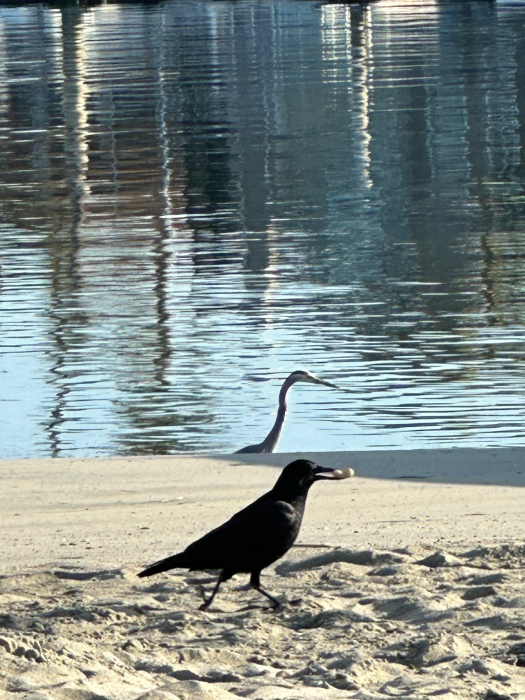
(*Artist credit: Donna Hilbert)
CAITLIN GEMMELL
The Sea Is My Church
Some find God in churches,
though this has never been my way.
Instead, I find the divine
near a holy, salt-kissed altar
during the misty twilight hour.
Some confess to a priest their sins.
I prefer to sing my blessings to the waves
who reward me by multiplying them.
The seaside returns my soul
to the cradle of her body
as I suppose is an experience
similar to that of some churchgoers
though I’d rather pray with seagulls
than parishioners,
worship with the starfish, mollusks,
and seals.
Some find God in churches.
I find the divine in fellow creatures
and in me
especially when participating
in this holy conversation with the sea.
Caitlin Gemmell is a poet who dreams of becoming a fairy godmother and relocating to the seaside. Her poems have been widely published, including most recently in Bella Grace, Kennings Equinox Collections: Autumn by Green Ink Poetry Press, and Elizabeth Royal Patton Poetry Prize Anthology. Occasionally, she shares her poems in her weekly newsletter on Substack.
JOHN DAVIS
Small Pockets
Sleep is my honest hour. The dog in me
growls inside a dream. How else to live
within the dry mouth of August and survive
the beehive nights. If I am a seed, I pull
sunlight from the sky. Moisture above the dry pond
is the ghost waiting to return. I let my dreams
follow their polluted streams. I sleep with their colors
inside my sheets. I am not giving in to the blues
the way fingers give in to minor chords
and the slunk-rhythms of midnight. I make
ventriloquists out of the stars which is
why, self, I am sending you to bed.
No supper. Your midnight snack is waiting
inside a sestina of sleep.
John Davis is the author of Gigs, Guard the Dead, and The Reservist. His work has appeared in DMQ Review, Iron Horse Literary Review, and Terrain.org. He lives on an island in the Salish Sea and performs in several bands.
LAURA BARR
Solstice
An Offering From San Pancho
You know,
last night was the longest night of the year—
when darkness hovers
until the sun rises,
rises, blanketing the trees,
the ocean,
with the color of rose.
In this transition from light to dark,
the caciques go mad,
and the roosters remind us
that it is time to get up.
I want you to wake up
and taste oranges and strawberries.
I want to tell you
that your life is no different
than writing a song,
that you are a baby,
just being born—
that you are no different than
a peony, whose petals
loosen and unfurl,
opening to all that is
possible and impossible.
Laura Barr is a micro-essayist, poet, and teacher. Her debut collection, Linger: 21 Micro Essays on Love and Leave Taking, offers poignant reflections on the complexities of love and loss. Her writing has been featured in Five Minute Lit and on her Substack, In Brief. Laura lives in Colorado with her partner, Robert, and their cat, Henry. Learn more at www.laurabarr.com.
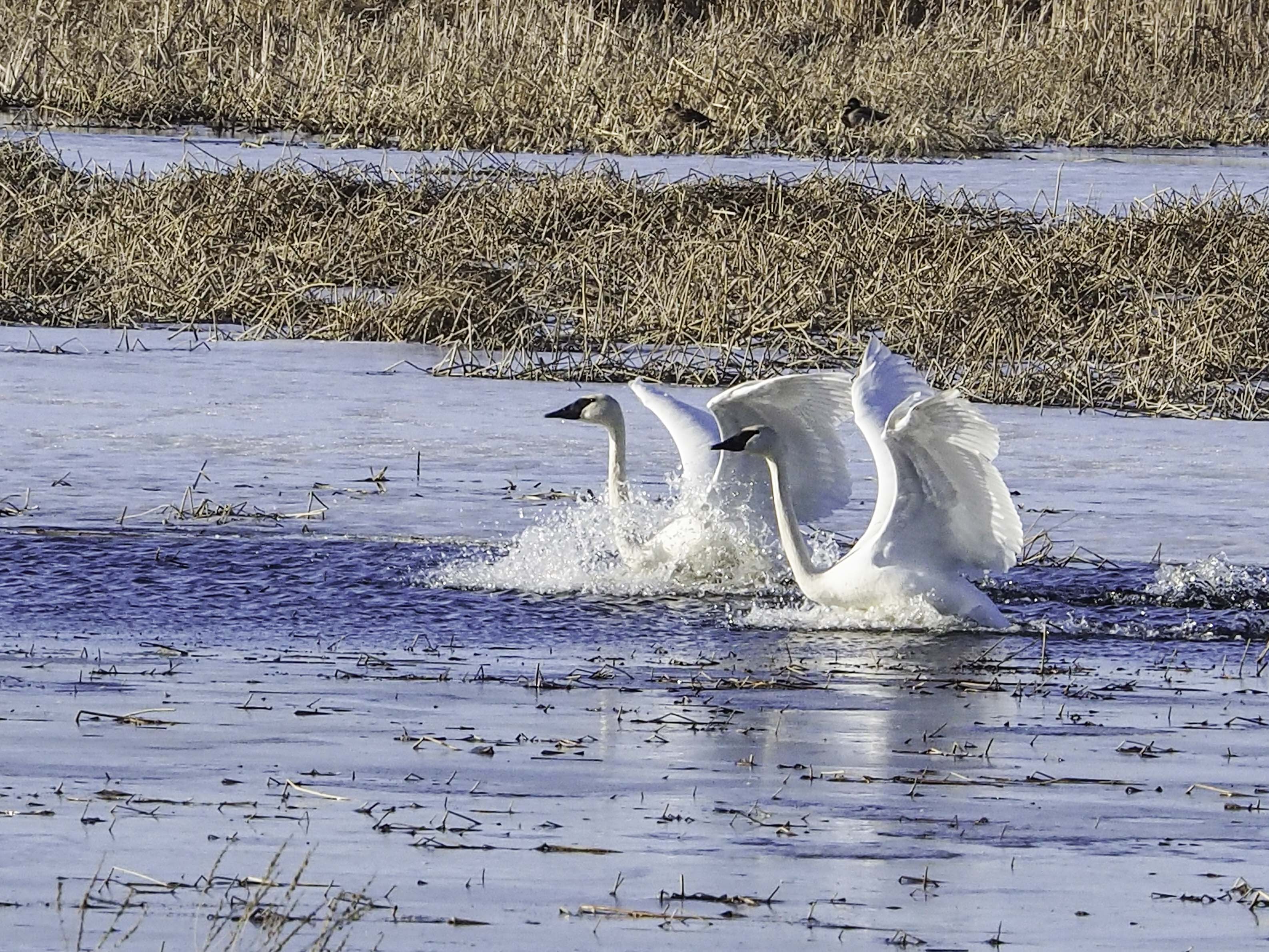
(*Artist credit: Karren Jeske)
MARY ANNA SCENGA KRUCH
When Souls Find Comfort: Ode to a Lake
Mourners tore out of church
like ripped pages from a hymnal,
their umbrellas dancing
like a dozen upturned hoop skirts
trying to beat the watery barrage
but she moved to the shore
the lake offering the only thing
vast enough to hold her sorrow
the sky blue-gray to black
water and heaven in flux
her breath ragged like severed bone
wedged in her gullet
yet she paused
to breathe deeply, gently
willing the waves to slow
willing the water to softly pool around her
to allow her to recall
an array of endless gifts:
the kindness of his heart
the comfort of his voice
as calm as still waters
and the wisdom of his nature:
a profound awareness of hurt
felt alone together
that made them wholly human
and that when souls find comfort in one another
parting is not possible.
Mary Anna Scenga Kruch is a career educator, writer, and photographer who celebrates the natural world and family, here and in Italy, in her writings and images. She has published a poetry chapbook, We Draw Breath from the Same Sky, a full-length collection, Grace Notes: A Memoir in Poetry & Prose, and a new full-length book, Water Marks. Recent poetry appears in Meat for Tea and Lothlorien Poetry Journal, and recent photographs appear in Water Marks. Mary Anna is on the editorial board of The Awakenings Review, a journal representing work by poets, artists, and writers living with mental illness.
FAITH PAULSEN
I Imagine Hildegard von Bingen Finds an Egg*
bluish white with spots:
A vision of the cosmos.
In her mind, the egg opens, revealing
in cross section, its shell,
membranes, albumin, the firmament
of fire, concentric circles,
red stars, anemones, and puffy-cheeked
winds that enring
the mountains and the moon,
at the center, the yolk,
the Egg of the Universe,
all things interconnected.
A great migrainous
ache bathes her. A tenth child, tithed away
like a fraction. She can feel she is a living
spark, and not
the weaker rib—
Her cheeks aflame, she calls her vision
an illumination. She paints it,
shimmering with bright pigments
in her manuscript Scivias, or Know The Ways
Her works overflow—
an encyclopedia of science, a language
of her own invention,
formulas for herbs and hops, healing
stones and planets. And music,
her plainchant limning
the earth’s living greenness,
yielding chamomile, the plum tree
dripping sweet plums,
the sweeter rain.
To Hildegard’s tongue, I imagine,
other visions taste metallic.
They have no sap; they do not groan.
They glow only on little screens in back pockets.
But, Hildegard perceives,
there is no pocket for the soul,
and illuminations are uncontainable birds.
I imagine the warm sparrow egg
rocked in Hildegard’s cupped hands.
Inside the labyrinth, music.
At the center, daybreak.
Love embryonic
out-skips the mystic hymn.
*Hildegard of Bingen was a German Benedictine abbess active as a writer, composer, philosopher, mystic, visionary, and as a medical writer and practitioner during the High Middle Ages.
Over the years Faith Paulsen has held day jobs as a technical writer, travel writer, freelance writer and in the insurance industry to support her family and her expensive writing habit. Author of three chapbooks and mother of three sons, her work appears or is upcoming in Scientific American, Poetica Review, Philadelphia Stories, ONE ART, and others.
https://www.faithpaulsenpoet.com/
KATRINA SERWE
The Gift
Ice Age National Scenic Trail: Plover Segment
The stranger at the start of the trail with
the black lab waited before turning to follow—
hung back when I stopped to take pictures,
paused until green was thick between us
and all I could hear was the chestnut-sided
warbler. In that space my shoulders relaxed,
knees softened to the bounce of boardwalk
over juicy roots of tamarack and red cedar—
vision widened to see the great blue heron roosting
and my jaw unwound,
opening to the sound of silence.
Katrina Serwe is a late blooming poet who enjoys foraging poems on Wisconsin’s Ice Age National Scenic trail. The trail never fails to give her an “offering” she values and hopes to share. One of Serwe’s trail poems received first-place in the 2024 Wisconsin Writers Association Jade Ring contest for poetry. You can follow her journey at www.katrinaserwe.com.
TRICIA KNOLL
Blueberry Field at Isham Farm in Late August
The perpetual light breeze is a mystery
I’ve come to expect. A tilted field and hundreds
of bushes, most well combed by u-pickers
except for late varieties, not as flavorful
as in July, mild sweet without requisite tart.
I come for that breeze on a day hot and humid
languishing under smoky clouds, remnants
of someone else’s forest fire, air just bearable.
So much rain made some surviving berries
mushy. I drop those for the spectacular
white and black chickens talking to each other
near my feet, louder than the sound of berries
dropped in a green carton made of recycled pulp.
I could be knitting, adding a stitch to a hat
for someone I’m gifting, the knitter’s blessing
for a head, but I’m slow picking one berry here,
two there in this field heavily gleaned,
land I know in winter as rows of sticks
and light drifts, sloped downwind from
the sugar shack. I can see the little fingers
of my grandson who eats these berries
one at a time. Boo bear he calls them. Boo.
Tricia Knoll’s poetry appears widely in journals as diverse as Kenyon Review and New Verse News as well as nine collections, either chapbook or full-length books. She is Contributing Editor to Verse Virtual. Website: triciaknoll.com
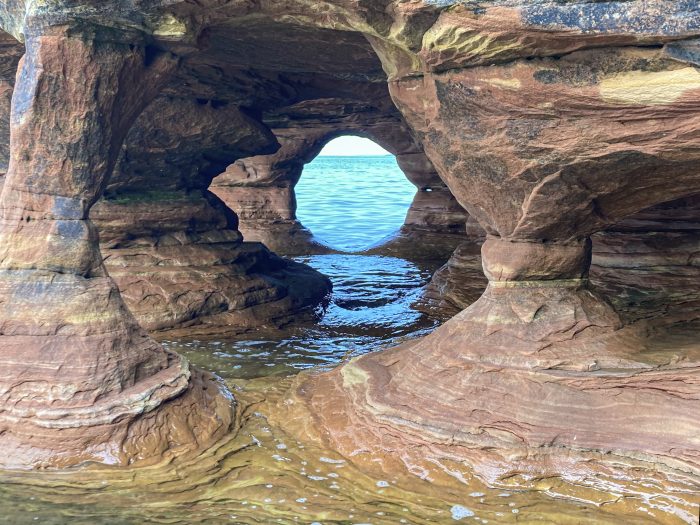
(*Artist credit: Michael Jeske)
SANDRA J LINDOW
Breath
The notion of YHWH as “Breath of Life”
accords with a deep sense of God as intimate
and transcendent at once. —Rabbi Arthur Waskow
My son’s first breath, my mother’s last,
the gentle movement of air in the chest
the essence of life, connected by breath,
plants breathing out what we breathe in,
the spirit that embodies and surrounds us.
A rabbi teaches that YHWH,
the Hebrew name for God,
reflects the sound of the breath.
Hebrew has no vowels and the word
is pronounced in two syllables
“Yah,” the intake of breath
and “wah” or “way,” the exhalation.
Remove the vowel sounds
and YHWH is simply breath,
inspiration and expression,
a name that cannot be
fully comprehended or spoken:
“I am who I am,” intonation
reflecting a great circle of emotion:
praise as in Hallelujah,
frustration as in “oy veh”
or inevitably, the unspeakably intimate
un-nameable names for grief,
all beginnings and endings,
becoming one in the billion-years
outbreath of the universe:
I am who I am. I am who I will be.
In April 2017, crocuses whisper bloom;
buds on the Freeman’s maple
in our side yard softly sigh,
swell with yearning for transcendence,
and in a hospital room
in Eau Claire, Wisconsin,
I sit simply breathing
as my secular Jewish husband
is surrounded by incomprehensible light
and becomes one
with the outbreath of the universe.
Sandra J Lindow has been West Central Regional VP since 1988, She has published nine collections of poetry. The most recent is Chasing Wild Grief, 2021. She has been previously published in Blue Heron Review, Asimov’s, and Star*line.
CAROL ALENA ARONOFF
It’s the Little Things
The spout of my blue and white flowered teapot
has two small eyes and a nose peering out; so
does the pink one sitting on a shelf beside it.
What are the chances of two geckoes finding
their way into neighboring spouts? And how
often have I walked by without noticing?
Sometimes it’s the smallest offerings that bring
the most delight: the surprise of finding
something so unexpected—that it stops
all thought and joy bubbles up. A hen
roosting in my flower pot leaves me an egg.
A penny on the pavement offers good luck.
A bumblebee hovers above the butterfly bush
singing jazz. A heart-shaped piece of coral
rests on the sand recalling past loves.
And what about the rainbow on an oil slick
in the road you almost missed by only
looking ahead? Right there, right now.
Carol Alena Aronoff’s poetry has appeared in numerous journals and anthologies. She was twice nominated for a Pushcart, has published 4 chapbooks (Cornsilk, Going Nowhere in the Time of Corona, Tapestry of Secrets, A Time to Listen) and 6 full-length poetry collections: The Nature of Music, Cornsilk, Her Soup Made the Moon Weep, Blessings From an Unseen World, Dreaming Earth’s Body, and The Gift of Not Finding: Poems for Meditation. Solitary Solitude Sanctuary is forthcoming from Stone Compass Press. Carol resides in rural Hawaii.
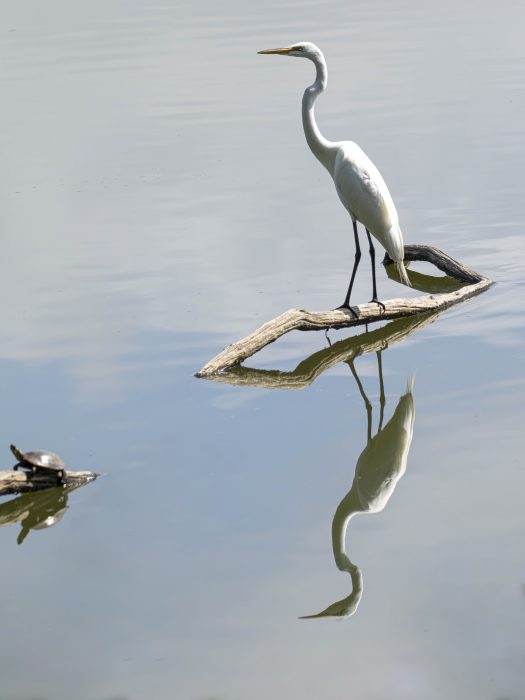
(*Artist credit: Michael Jeske)
ANITA PINATTI
Seed Gathering Festival
floating, floating
lightly on my brain
white pavilions, frothy blue
seen again as in
a recurring dream
The dowager’s princess
brings wafers and jam,
rose-petal tea
in porcelain bowls.
We gather like seeds
on the Star-Gazing Bridge.
Basho arrives, bows are made.
Easily mistaken for a bird,
we watch him fly
from bridge to roof.
Anita Pinatti enjoys the challenge of combining her poetry and photography while she lives in and loves New England. Her poetry has appeared in The Comstock Review, SALT, Earth’s Daughters, and many other journals.
ARTIST BIOGRAPHIES
KARREN JESKE ~ Photography has been Karren Jeske’s muse since she was a young child. She had the Family of Man photo exhibition book, in her bathroom, of all places, and spent many hours contemplating the 503 images it held. Photographer Edward Steichen described his photos as, “a mirror of the essential oneness of mankind throughout the world.” From Brownie and Instamatic, to mirrorless and cell phone, cameras are Karren’s constant companion to connect with others, and see details she would otherwise miss.
MICHAEL JESKE ~ Michael Jeske’s photography is inspired by his father who took photos of their family events and nature when he was young. He has been a serious photographer/artist since the early 1970s. Today, photographing nature is one of his greatest joys. His camera is his talisman to find beauty and wonder in nature and the world.
JEANNIE E ROBERTS ~ Jeannie E Roberts is an artist, poet, and photographer. Her drawings are highly stylized, and focus on the organic forms, shapes, and design elements found outdoors. Both her drawings and photography have appeared in online journals, magazines, and print anthologies, including Anti-Heroin Chic, Blue Heron Review, Braided Way Magazine, Bramble, The Poeming Pigeon: A Journal of Art & Poetry, Portage Magazine, Quill & Parchment, Silver Birch Press, South Florida Poetry Journal, Synkroniciti Magazine, Wild Roof Journal, and elsewhere. She has authored nine books, including her most recent title On a Clear Night, I Can Hear My Body Sing, a full-length poetry collection (Kelsay Books, 2025). She serves as a poetry editor for the online literary magazine Halfway Down the Stairs and finds joy spending time outdoors and with loved ones.
KAI COGGIN ~ Kai Coggin (she/her) is the Inaugural Poet Laureate of Hot Springs, AR, author of five collections, and a recipient of a 2024 Academy of American Poets Laureate Fellowship. She has won numerous awards and fellowships, and her poems have been published in POETRY, Academy of American Poets, Best of the Net, Prairie Schooner, and elsewhere. Coggin is a Certified Master Naturalist, a K-12 Teaching Artist in poetry with the Arkansas Arts Council, and host of the longest running consecutive weekly open mic series in the country—Wednesday Night Poetry. www.kaicoggin.com
DONNA HILBERT ~ Donna Hilbert’s latest book is Threnody, Moon Tide Press, 2022. Enormous Blue Umbrella is forthcoming from Moon Tide in early 2025. Work has appeared in Cultural Daily, Gyroscope, Rattle, Sheila Na Gig, ONE ART, Vox Populi, and anthologies including The Poetry of Presence volumes I & II, The Path to Kindness, The Wonder of Small Things, and I Thought I Heard a Cardinal Sing.
Copyright © 2025 Blue Heron Review ALL RIGHTS RESERVED
(Blue Heron Review holds first publication rights of poems. All original rights go back to individual authors/artists.)
 Blue Heron Review