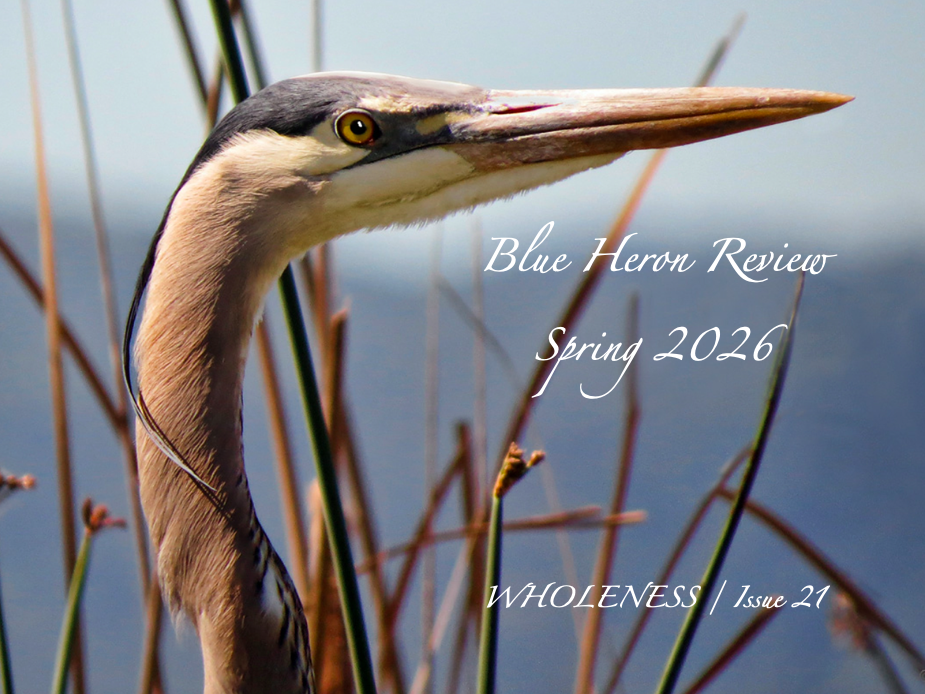
(Cover artist credit: j lewis)
WHOLENESS
CONTRIBUTORS:
Poets:
David Anson Lee * Emily Tee * Ellen Rowland * Jill McGrath * Barbara Krasner * Jenna Wysong Filbrun * Mary L Serantoni * Jean Janicke * Kate Young Wilder * Michael Hettich * Lynne Burnett * Debora Tremont * Vivian Faith Prescott * Jeannie E Roberts * Francis Opila * Catherine McGuire * Daniel Thomas * Donna J Gelagotis Lee * Faith-Anne Bell * John Willson * Carolyn Chilton Casas * Janet Ruth * Patricia Nelson * Susan Shaw Sailer * Paula Schulz * Sophia Joan * Abha Das Sarma * Christine Daleiden
Artists:
j lewis (cover artist) * Kurt Huebner * Karen VandenBos * Paula Lietz
DAVID ANSON LEE
What the World Keeps Teaching Me
Wholeness arrives in seasons,
never all at once.
Spring loosens the earth:
green returning by agreement,
creeks remembering
how to speak.
Summer opens its palms:
coastlines breathing salt and wind,
the sea repeating itself
until I believe in continuance.
Autumn turns inward:
gold thinning to ember,
mountains holding silence
like something sacred
they will not name.
Winter sharpens the sky.
The world strips itself
to what matters.
Ice practices patience.
Snow listens.
I have stood in the tropics,
where air hums with color,
where light feels near enough
to answer.
I have watched the Arctic night
ignite in green and violet:
the aurora lifting its veils,
proof that mystery survives
explanation.
Above it all,
the moon keeps its appointments.
Stars scatter themselves
without apology.
Distance becomes
a form of intimacy.
Wholeness is this turning:
land to sea, heat to cold,
dark to revelation.
Not perfection,
but belonging
to a vast, breathing order
that includes me
without asking
that I understand it.
*
The Weight That Taught Me Light
I learned wholeness the morning
you were placed in my arms:
your weight, small and decisive,
a question I could not set down.
You slept as if the world
had already forgiven you.
Your breath stitched time together,
each rise and fall,
a vow I did not yet know
how to keep.
In your closed fist,
the future tightened:
unyielding, entrusted.
I felt the gravity then:
how love outweighs fear,
how joy carries consequence.
Outside the window,
dawn rehearsed itself:
light finding edges,
making the ordinary radiant.
I understood then
that wholeness is not completion,
but devotion.
Years have taught me
how to stand where hope
meets responsibility,
how to be strong enough
to let you move beyond me,
and steady enough
to remain.
If I am whole now,
it is because you taught me
that love does not finish us:
it enlarges us
until we rise
to meet what we’ve been given.
David Anson Lee is a poet, philosopher, and physician whose work explores connection, responsibility, and the search for meaning across the human and natural worlds. His poems have appeared in Ink Sweat & Tears, Silver Birch Press, Braided Way, and Eunoia Review. He lives and writes in Texas.
EMILY TEE
Let This Forest Recharge You
a Golden Shovel after William Stafford’s
“How to Regain Your Soul”
It’s all to do with the tall trees, high above,
the possibility they seem to offer, clean air
to breathe, room to just be. Breeze sighs
through low scrub and grasses, finding the
way through the woods, ruffling oaks and pines.
A forest is its own thing, not unwelcoming; it’s the
way a horse at a fence is, eyes showing white
with watchfulness, ears flicking, soft butterflies
in constant movement, hooves ready to dance
away if it needs to. You win it over, little by
little, and it lets you in. This forest does too, the
sweep and expanse of it, acreage in the thousands,
so large and wide you can hardly take it all in,
but it has room for you among its creatures, the
welcome is here if you want it, to find your fit, still
calm and solace are here with the soft kiss of sunshine.
Emily Tee writes poetry about place, focusing on people, nature and the environment. Her poetry appears in a range of publications online and in print. She has a mini poetry chapbook due for publication with Atomic Bohemian in late 2026. Emily is also the judge of the regular ekphrastic poetry challenge run by The Wee Sparrow Poetry Press. She lives in the UK.
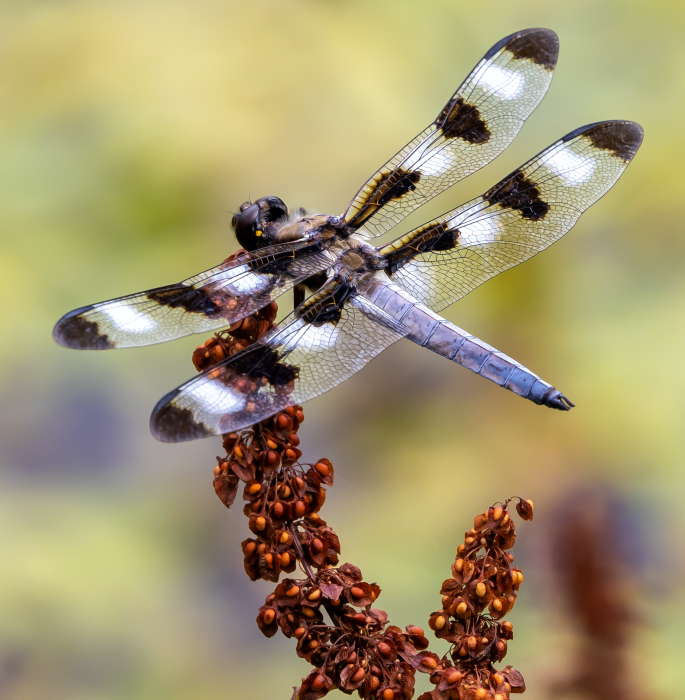
(Artist credit: Kurt Huebner)
ELLEN ROWLAND
All the Ways to Name a Dragonfly
What if your first thought upon waking
was not of all you have to do, or how sad
and frightening the world is, but this:
I am alive. In a body. On a day I have never met.
Hello, you beauty.
What if, instead of reaching for a dark screen,
you stood on the back porch of this weeping,
sought the bay window of the sky seeping
peach light into your soul, or maybe slate, salmon,
cerulean, painting the day alive with swathes
of impossible color right before your eyes.
What if, despite your knotted heart, you made a list
of everyone you love, anthologized the weeds
in your yard, collected seeds, feathers, and lost poems,
made a lexicon of all the ways to name a dragonfly
in this world: libellule, vážka, dreóilín, pilivesa, spāre.
What if you then made something with your hands—
a daisy chain, bread, a potholder, a salad of dandelions—
and gave it to someone near, a neighbor, a child, a stranger,
because the others are too far away. This matters, too.
And what if, today, you allowed yourself to feel the rough husk
of all you are—every fault, fear, scab and scar—so that the goal
is not to be right or good, but to be whole. Like something
slightly bruised in the fruit basket on the kitchen table, you sink
your teeth in and bite anyway, like it’s the very first time.
Ellen Rowland is a writer and editor who leads small, generative poetry workshops on craft and form. She is the author of two collections of haiku: Light, Come Gather Me and Blue Seasons, as well as The Echo of Silence/L’écho du Silence, a bi-lingual book of haiku and tanka. Her full-length poetry collection, No Small Thing, was published by Fernwood Press in 2023. Her writing has appeared in numerous literary journals and in several poetry anthologies, including The Path to Kindness and The Wonder of Small Things, edited by James Crews. Her collection of after poems, In Search of Lost Birds, is forthcoming from Kelsay Books. She lives off the grid with her family on a small island in Greece.
JILL MCGRATH
The Sound of Prayers Rising
Full Moon at Boudhanath, Nepal
In the gompas in Boudhanath, butter lamps flicker
a hundred pools of fire; light wavers
on gleaming bronze faces of the holy ones—
White Tara, Vajrapani, Amitabha, Buddha.
Worn hands of Tibetan pilgrims
begin the soft clacking of prayer wheels
like wings rising to the moon,
sending prayers for peace into the universe
as they begin the ritual circumambulation
of the great stupa. Tread slowly with those
who prostrate themselves,
down and up, to embrace the earth,
to press their noses and bodies to the grit
of stone, up and down, while the sacred stupa
rises above them like a pure beacon.
Some are dusty, many tattered,
some have crawled and bowed down for miles.
And they crawl or step the uneven stones
carefully for balance under Buddha’s eyes.
Face toward the sacred center,
one of the holiest pilgrimage sites in Asia.
Follow the maroon-clad monks ringing the bells, lighting
butter lamps, and turquoise-necklaced Tibetans,
red cloths wound through braids while peace
ripples outward. Immerse yourself, meld in, honor,
feel the rough wool elbows around you.
You’re circling, pulled in a solemn flow.
World falls away: the grind and belch of taxis,
rasp of dogs, radios blaring news, jabber
of tourists, squeal of boys chasing one another.
Some finish now, drinking chang and embracing;
others stumble to the stone wall to rest.
Elder steps shuffle, younger ones elbow in,
push each wheel. All have journeyed,
worshipper or pagan, to join this sacred cycle
steeped in another time—
under this moon, full and serene, under prayer flags’
ancient whisper—hundreds of us are moving,
around, together, in unity:
let peace prevail in the universe.
The rustle of these prayer flags,
the hopeful whir of the prayer wheels—
for me these are
like the breathing of trees.
Jill McGrath is a Seattle poet who finds inspiration on a paddle board, a hiking trail, or a dance floor. Memorable adventures include a year-long bicycle journey in Asia and a year editing tourism magazines in Nepal. She’s published a chapbook, The Rune of Salt Air, and has had 47 poems published in literary magazines. Recent publications include: Between the Lines, The Last Stanza, and Dorothy Parker’s Ashes.
BARBARA KRASNER
Two Halves of One Whole
If I painted a portrait of my twin sister and me, I would paint magic carpets and hippopotami. I would show one half that’s her and one half that’s me, but we would wear one hat with ear flaps the way we did when we were toddlers. She would hold a ball and I would have my right index finger in my mouth, the only way to tell us apart. She would be smiling and I would be crying, because she laughed when threatened and I bawled. I would frame us with watermelon pits and Barbie shoes. Born four minutes apart, her flesh covers mine. Roots grow from the same shell source beneath us, thrusting us out of the womb. We are two halves of a watermelon. We can exist alone, but do we want to? We are only ripe when someone taps our skin, both of us at the same time. Then we can be split apart and be meaty, sweet, and delicious.
Barbara Krasner is a New Jersey-based poet and historian. She is the author of ten poetry collections, including The Night Watch (Kelsay Books, 2025), and the forthcoming The Wanderers (Shanti Arts, 2026). Her work has appeared in more than seventy journals, earning her multiple Best of the Net, Best Microfiction, and Pushcart Prize nominations.
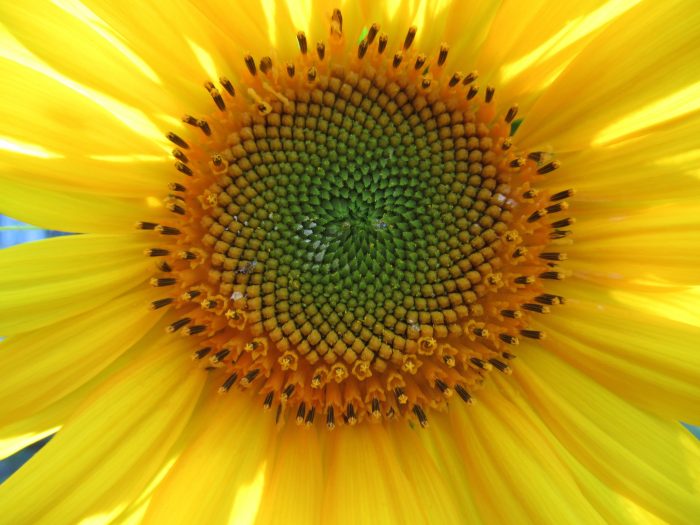
(Artist credit: Karen VandenBos)
JENNA WYSONG FILBRUN
No Matter What Happens
for Jane Goodall (1934-2025)
You know you are of the sun
when you step into an autumn afternoon
through the crunch of crinkled leaves,
and your cricket pulse quickens.
You get still and heavy with shine.
The gold-spice air opens space
for light like it must have been
when original reality
gave itself to be so.
Woodpeckers hammer
over scurrying squirrels.
Brittle leaves shuffle down
to where plants sink into the heart space
underground.
Each speaks the language
of our one little sun,
whose low-close rays on your face
make you feel
you can love the whole world
in our pain
with your light.
Jenna Wysong Filbrun is the author of the poetry collection, Running Toward Water (Shanti Arts, 2026). Her poems have been nominated for the Pushcart Prize and Best of the Net and have appeared in Deep Wild Journal, Gyroscope Review, ONE ART, and other publications. She practices poetry to deepen her awareness of connection and loves to spend time at home and in the wild with her husband, Mike, and their dogs, Oliver and Lewis. Find her on Instagram @jwfilbrun.
MARY L SERANTONI
River
listen
there is nothing
like
first launch,
from the shore
into
welcome waves
we float
river
has its way,
as the water
greets us …
paddle
till rhythm set
against gentle breeze
Colorado River
brings joy like no other …
tiny swallows twitter
hootie owls peek
eyes follow
from crevasses in high rock walls
occasional turkey vulture
brings a chill
till blue grey heron
unfolds grand wings
to takeoff
and soar elegantly
we were
meant to be here
mind clear, calm, serene
heart full
breathing slows
in these moments of grace
keep memory close
what an extraordinary
wonderful place
to be grateful
Mary L Serantoni is a poet based in Arizona, originally from Chicago, Illinois. Her work appeared in Poets for Science (12/20/2025), “Farraday Newsome: Memento Vitae, My Body Is Your Nest” exhibition catalogue for the Mesa Contemporary Arts Museum, Museum of Northern Arizona’s “Poetry Maps” exhibitions (2024, 2025), and soon to be published in Syncopation Literary Journal (Volume 5, Issue 2). She holds a BA from Chicago’s DePaul University, is a member of BMI, and a poetry workshop through a local nonprofit.
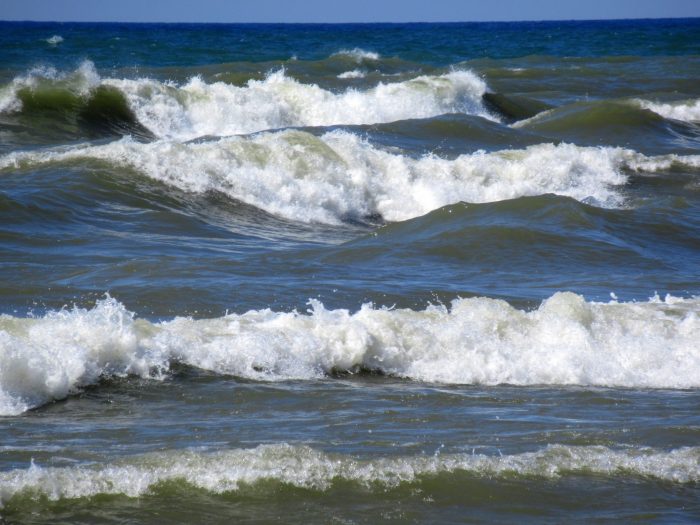
(Artist credit: Karen VandenBos)
JEAN JANICKE
On the last night of the dance retreat, the shore is our stage
Let’s descend down steep stone steps at sunset
to dance on sand as waves arabesque
toward our toes. On the beach, unmasked,
we can dance without fear of contagion
to an audience of one grey rock.
The bright eye of the setting sun paints
a white stripe from horizon to shore,
a spotlight across the water’s surface.
When the music starts, the rumble of Pacific surf
competes with the pitch of mizmar and oud
so that we strain to hear the call and response.
We mirror the motion of the sea. Energy snakes
from our shoulders to fingertips to shape serpentine
arms. Left hip then right crests to the sky,
plunges in an arc to the earth, and returns to the center
to start the cycle again.
Our toes sink as we twist. Surf edge
grasps our feet and bubbles. By the time
we strike a final pose, gather bags roosting
in bare tree branches, and rinse the sand
off our feet, the incoming tide will answer
the call of the moon, spill dark water,
and erase all trace of our moves.
Jean Janicke is a writer based in Washington, DC. She enjoys sunshine, good coffee, and walks with friends. Her work has appeared in numerous journals, including Dorr Is A Jar and Loch Raven Review.
KATE YOUNG WILDER
Aspen
I want to be
as aspen—influenced
by the community
of each other.
Not one tree,
but a sharing
of root and hardwood
and sugary bark.
Medicinals for elk, mule deer,
and those wise enough to know.
Let my people remember
me like that—
that I gave help
and received it, too.
That we were lovely
in our yielding.
Let me, on this autumn day
of my own life, tremble
with all beauty holds.
Quaking with joy. Shimmering
with the light of a million drops of sun
laughing through me.
And when I go, the way we all go,
let my memory be a compost—
fecund and feeding—
for what grows after me.
For what I longed most
to nourish. For you.
Kate Young Wilder is a writer who lives on a large pond in New Hampshire. She is a retired writing teacher and well-received workshop and retreat leader. Kate serves as a spiritual companion with Rolling Ridge Retreat Center. She and her husband also spend time at their home in Grand Rapids, Michigan to be near friends and family there. Kate’s forthcoming book is titled, Alphabet of the Second Chance. She is also the author of The House Where the Hardest Things Happened (Doubleday, 2001).
MICHAEL HETTICH
The Wound
There’s a new waterfall in the woods above my house,
a half-mile in, up a steep slope, hidden
in a copse of rhododendron, white pine and stunted
oak trees. It emerged after the inundating rains
of Hurricane Helene reshaped these mountains.
Just a small trickle, still it falls twenty feet
with an eagerness that makes me feel hopeful, a little,
for what I can’t say. All I know is that it’s beautiful
in a way that silence can be, sometimes—
silence layered across silence, to sing
amidst the world’s chatter and look at me gymnastics.
And though I visit rarely, I need to know it’s there.
I carry it with me where I go, this wound
in the land that has drawn forth water, and sings
for the trees and the sky, the rocks and the secret
animals that come to drink and listen
along with the creatures we know.
Michael Hettich has published over a dozen books of poetry, most recently A Sharper Silence (Terrapin Books, 2025). A new book, Waking Up Alone, is forthcoming. His work has appeared widely in journals. He lives in Black Mountain, North Carolina.
LYNNE BURNETT
Findhorn, 1975*
Free, love was and joy, easy—there, then:
the must-see-for-myself green miracle
of giant cabbages harvested from a soil
of sand and shale, the North Sea
storming in, wind high, I’m high
just walking the dunes, sleeping there,
uncomplicated sex under stars, how whole
I became moving in the holy orbit of devas
and om, revelling in revelation, a sanctuary
so unlike any other, it gave me a future
to believe in, no matter the worlds to come,
and with it, sweet Mnemosyne, now and
again laying another log on a storied fire,
re-membering me.
*Findhorn was founded as an ecovillage and one
of the largest intentional communities in Britain.
Lynne Burnett’s poems have appeared in many magazines and anthologies in the US and Canada. A Best of the Net and Pushcart nominee, she won the 2016 Lauren K. Alleyne Difficult Fruit PP, 2019 Jack Grapes PP, and Kelsay Books’ 2023 Women’s Poetry Contest. Lynne is the author of the chapbook Irresistible. Recently retired, she now lives on Vancouver Island.

(Artist credit: Kurt Huebner)
DEBORA TREMONT
Say Yes
Say yes to this early morning
in the garden, eyes gritty
with sleep, ears open to birds
calling out important messages—
look here, look here, look here.
Say yes to dirt under ragged
fingernails, to the presence of weeds
in their adaptive glory, challenging
you with their transgressive growth.
Say yes to nature’s plan that isn’t
your plan, a reminder life
is not a win-lose game.
It’s a dance around the pole
of a sweet spot.
Say yes even to the mosquitos
that rise in small clouds to tattoo your skin,
acolytes dipping their stingers
into the juicy altar of your ankles.
Say yes to sharing this space
you’ve claimed as your own,
you are the intruder after all.
Say yes to dirt and weeds, the heavy
layer of humidity, the escalating heat.
Say yes, and yes, and yes again,
as you worship in this space you
call your garden, this wild space
you call home.
Debora Tremont pursues a daily poetry practice, exploring memories, time, the beauty of daily life, and the adventure of aging. She lives on the Northshore of Lake Pontchartrain, an hour from New Orleans. Debora loves engaging with other poets on the art and craft of poetry. Her poems have been published at Silver Birch, Braided Way, and Humana Obscura. She has earned an honorable mention in Concrete Wolf’s 2025 Chapbook contest, and was nominated by Braided Way for a 2026 Pushcart Prize.
VIVIAN FAITH PRESCOTT
Calling to Mind
The whale surfaces in the curve of bay,
encircles our fishing boat. At once,
the space between humans and curious
creature unspool infinity into a moment.
Time hovers, then pulses its awe
through me. I’ve seen whales many times—
their sea-silken backs rising from the deep.
But it’s as if my memories are omitted
from my nautilus channels somehow.
I live and fish among these islands—
so, it’s normal to see whales, but how
could I have forgotten a lifetime of sightings?
But then the whale blows rainbow vapor
from her spiracle and I realize I’ve been
holding my breath, waiting—
and I exhale a memory, remembering
my first encounter—I’m a barefoot child,
padding on the beach, flapping arms
like a gull and suddenly—Beside me,
a sun-glint back rises, then spews
warm breath and an airhorn bark,
startling me into glee. I shriek!
The whale’s uptime on the surface lingers …
lingers, as if the whale is amused
with my show-off merriment trudging
through tidepools—both of us sharing
and loving this liquid and barnacled world.
Vivian Faith Prescott was born and raised on a small island, Wrangell, Kaachxana.áak’w, in Southeast Alaska where she lives and writes at her family’s fish camp on the land of the Shtax’heen Kwáan. She is a member of the Pacific Sámi Searvi and a founding member of Community Roots, the first LGBTQIA+ group on the island. She’s the author of poetry, fiction, and non-fiction. She co-facilitates two Alaskan writers’ groups: Blue Canoe Writers and the Drumlin Poets.
JEANNIE E ROBERTS
Hylocichla mustelina
—including lines from the poem “A Wood Thrush Sings”
from the chapbook Nature of it All (Finishing Line Press, 2013)
Wholeness arrives high in a treetop
where summer’s emerald umbrella
hosts the resonance of nirvana—
Flutelike and spare
its languor of note
drops gently as dusk
washes the woodlands
moving afternoon’s
last blush of light
toward horizon’s
crimson slumber—
Here, I release all sense of self
drop gently into the transcendence
of nature’s holistic embrace.
Jeannie E Roberts is the daughter of a Swedish immigrant mother and the author of nine books, including On a Clear Night, I Can Hear My Body Sing (Kelsay Books, 2025). Her work appears in various publications, including Blue Heron Review, The Ekphrastic Review, Panoply, and elsewhere. Since 2018, she has served as a poetry editor for the online literary magazine Halfway Down the Stairs. She finds joy spending time outdoors and with loved ones.
FRANCIS OPILA
A Kind of Kindness
A trio of ravens descends, circles, cavorts with me,
then the marsh hawk flies six feet over my head,
acting like I am invisible or unimportant, lost
in my own anxious clouds. Please give me a river
to flow through this haze, maybe this is spaciousness,
an invitation to swim without haste, with no expectations.
Let me feel the warm sun, listen to croaks of chorus frogs,
witness flight tricks of ravens while cool breezes whisk
through forests of immense firs, deep fungi, Oregon grape.
Clouds lift, oceans of thought at bay, my vertigo now
balanced with breath, the hawk glides over its marsh,
flushes a mouse, perches on a fence post to exhale.
At the forest edge a hermit thrush sings oh, holy holy.
The wind melts, stillness brings my unknowing home.
Francis Opila is a rain-struck, sun-loving poet who lives in the Pacific Northwest. His work, recreation, and spirit have taken him into the woods, wetlands, rivers, mountains, and deserts. His poems have appeared in Willawaw Journal, Wayfinding, Windfall, and other journals. His poetry collection Conference of the Crows was published in 2023. He enjoys performing poetry, combining recitation and playing North American wooden flutes. More of his creative work can be found at francisopila.com.
CATHERINE MCGUIRE
Heaven for Claudia
She once wove a 10 foot blue-green globe—
or rather, helped many children to weave,
to create a linen and wool Earth, to experience
intertwined land and sea. Their faces
in that yellowing photo are full of joy—hers, too.
The globe was precious, glorious, but also fragile—
a bubble that eventually fell in.
I never knew her as a redhead—I missed that.
What we could have done as twenty-somethings!
She might have been too wild for a scared Catholic teen
but she might have opened the world to me earlier.
Gentle hands weave kindness into my days,
her smile as warm as a winter woodstove.
She delights in pulling together strands,
showing how we form one cloth,
one world. She avoids scissor-like words
that cut and separate. She delights in sermons,
pulpit wisdom that joins heaven and earth.
She salvages so much, wanting nothing to be abandoned.
She has a home for the quirky, and that which could be more—
like me, like other friends, colleagues, her darling spouse.
Cut loose from her precious loom,
her weaving is now transparent:
friends, gifts, quiet chats,
the way she reads from her journal to give us pause.
She warps the loom of her days with love
the weft is hundreds of little kindnesses,
and the cloth is glorious.
Catherine McGuire is a retired art therapist, writer, and artist with a deep concern for our planet’s future. She spent ten years as a therapist in secure facilities, until disabled by illness. She has five decades of published poetry, four poetry chapbooks, a full-length poetry book, Elegy for the 21st Century (FutureCycle Press), a SF novel, Lifeline, and a book of short stories, The Dream Hunt and Other Tales (Founders House Publishing). Find her at www.cathymcguire.com.
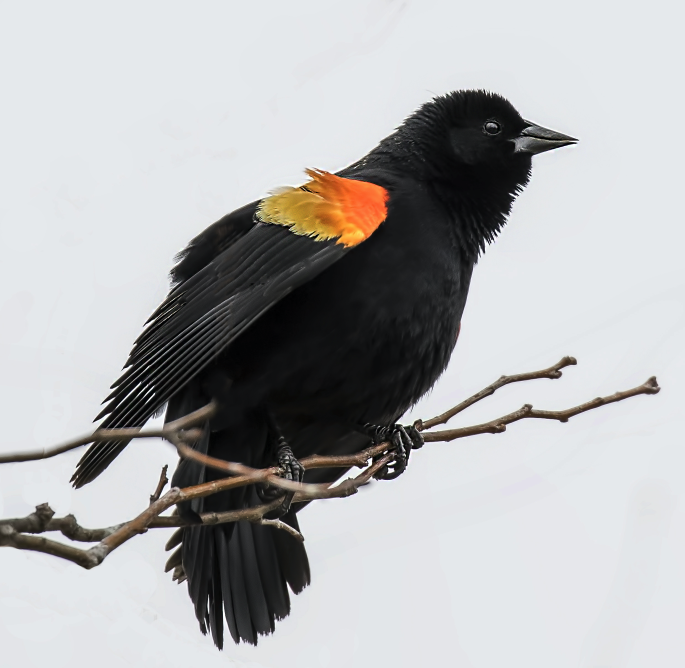
(Artist Credit: Kurt Huebner)
DANIEL THOMAS
Boundless Blue
We struggle to move
on the mountainous scree within.
But the cheerful sparrows in the dawn
shrub, the wistful mourning dove
on the wire, the shrill red-winged
blackbird by the lake, tell us
the boundless blue above
is clear and without want.
New spring leaves wisp out
their pale green fronds.
To find a holy spirit in the quaking
aspen leaf is a good start.
Now look into the eyes of the people
you pass on the path.
Daniel Thomas’s third poetry collection, River of Light, was published by Shanti Arts Publishing in 2025. His previous books are Leaving the Base Camp at Dawn and Deep Pockets. He has published poems in many journals, including Southern Poetry Review, Poetry Ireland Review, Amethyst Review, Vita Poetica, and others. More info at danielthomaspoetry.com
DONNA J GELAGOTIS LEE
The Only Thing That’s Keeping Her Whole
In the day, the limbs
of trees are waving
to her. (Yes. It’s
like that.) The parts
of her life are revolving
around her and can’t
seem to get whole.
It’s just that the
seams are straining,
in fact may be tattered.
She’s on the rack
of everyone’s needs
and coming up
for air. In the short
breaths, she pauses. And
he touches her. And inhale.
The afternoon changes
its pace into a long
slow drawl as
their cadences
dance into time that
only begins
marking itself, then leaves
as they forget
their separate worlds.
Donna J Gelagotis Lee is the author of two award-winning collections, Intersection on Neptune (The Poetry Press of Press Americana, 2019), winner of the Prize Americana for Poetry 2018, and On the Altar of Greece (Gival Press, 2006), winner of the Seventh Annual Gival Press Poetry Award and recipient of a 2007 Eric Hoffer Book Award: Notable for Art Category. Her poetry has appeared on Verse Daily and in numerous anthologies and journals internationally, including Cimarron Review, The Massachusetts Review, Southern Humanities Review, and Women’s Studies Quarterly. Her website is www.donnajgelagotislee.com.
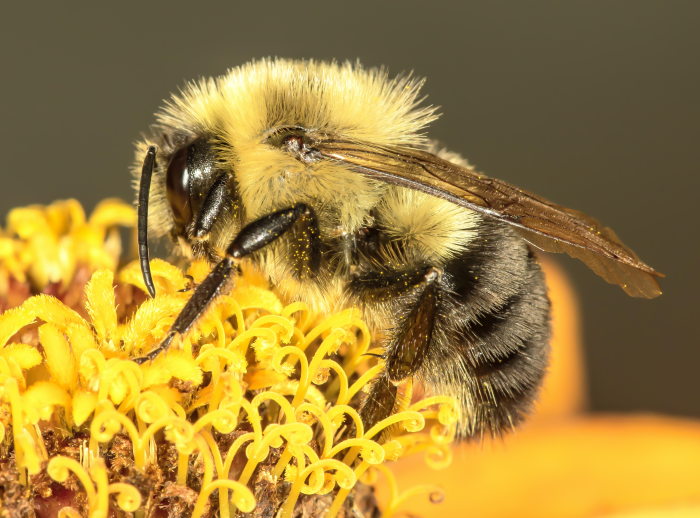
(Artist credit: Kurt Huebner)
FAITH-ANNE BELL
My Mother Left Me in Winter
She is winter stalks left out
for bumblebees to rest & nest
She is rain drops congregating
in little lakes that will turn to ice
She is fallen leaves slowly becoming
soil for spring daffodils & hyacinths
She is long nights bellowing
leaving time for fireplaces & cozy socks
She is air I breathe in & out
circulating through a blanket of stars
She is holiday cavalcade parading memories
of when she was flesh, & blood, & mine
She is everything & everyone
at once, at once
filling the empty aching of
where she was
Faith-Anne Bell resides in Maryland and received a BA in Literature from UMBC. Following the death of her husband at the age of 41 and her mother within a year’s time, Faith-Anne has rededicated herself to writing. She has recently had her work in Pen in Hand, Underbelly Press, and Stripes Literary Magazine. Faith-Anne can be found reading at open mics in Baltimore.
JOHN WILLSON
First Morning
Phnom Penh, Cambodia
Dawn light gilds upthrust eaves
of the temple across the street.
Two floors below, by a gate, a young monk
pulls a cell phone from his marigold robe.
Power lines tangle the space between us.
With jet lag and a bottle of water
I look forward to croissants in the courtyard
of this villa, jams of passion fruit,
mango, a glass of guava juice.
A man on a motor scooter
pulls up to the monk, who eases
sidesaddle onto the back of his seat.
There they go, the driver steering the monk
to some place where he may seek alms.
Between two fingers I take the hem
of the monk’s robe as it flutters
behind him down the street, disappear
with him in the great roundabout:
motor scooters, cars, tuk-tuks, bicycles,
each honking intention.
Counterclockwise we enter traffic,
our axis the tower with a lotus dome,
the monk’s robe now a marigold fleck
in a wheel, a mandala
seen from above.
John Willson is a recipient of the Pushcart Prize and awards from the Academy of American Poets and the Artist Trust of Washington. His full-length collection, Call This Room a Station, was published by MoonPath Press in 2020, and he was recently included in Cascadia Field Guide: Art, Ecology, Poetry and Alaska Quarterly Review. A two-time finalist in the National Poetry Series, John lives on Bainbridge Island, Washington, where his is retired after a 30-year career as a bookseller at an independent bookstore.
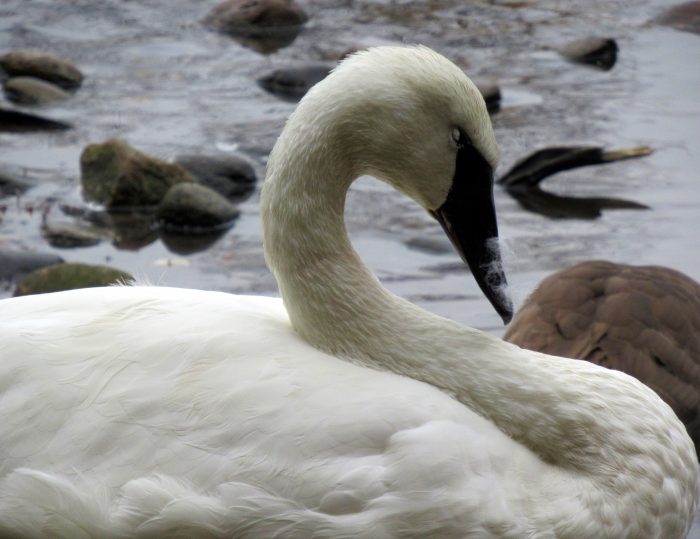
(Artist credit: Karen VandenBos)
CAROLYN CHILTON CASAS
Wonder of a Body
I praise the way you heal
so gracefully,
how you make a riven piece
of flesh whole again,
contend with wounds
and illness,
allow me to come back strong,
the way you offer assurance
when my body’s ability
is in question.
Considering the miracle
of creation,
I find it extraordinary
that I was in fact conceived,
grew inside my mother,
then was born—
another body
to live out its days praising
existence in this curious,
improbable place.
Carolyn Chilton Casas’s poetry has appeared in journals such as Braided Way, Grateful Living, and One Earth Sangha and in anthologies including The Wonder of Small Things: Poems of Peace and Renewal, Thin Spaces & Sacred Spaces, and Women in a Golden State. She is a practicing Reiki Master and teacher who explores ways of healing in the articles she writes for energy and wellness magazines in several countries. More of Carolyn’s work can be found on Instagram and Facebook, at www.carolynchiltoncasas.com, and in her newest collection of poetry, Under the Same Sky.
JANET RUTH
Sky Hard as Stone
Seated in my comfortable chair,
I saw that all attempts to chart my life
in the book of secrets had ended
in foolishness.
My pen had run out of ink.
When I dropped it, it spun beyond
my reach. The dark brew
in my coffee mug was bitter.
The page before me was blank.
So I laced on my boots
and went looking for the moon,
which was being swallowed
by a pillow of clouds
over the mountain to the west.
The morning was cold
and I was glad for my fuzzy sweater.
Remnant puddles in the acequia
were glossy with ice. Smooth shards
reflected the eastern sky,
hard as rose quartz.
But a quizzical note, whistled
by a sparrow perched high
in the cottonwood, shattered
my sorrow. With that breaking,
my ears were opened,
and my eyes. I could see,
and hear and taste the world.
And for the moment, at least,
the hunger inside me was fed.
Janet Ruth is a New Mexico ornithologist and poet. Her writing focuses on connections to the natural world. She has recent poems in Unbroken, Tiny Seed Literary Journal, Ekphrastic Review, and anthologies including The Nature of Our Times (Paloma Press, 2025). Her sonnet, “A World That Shimmers,” won the inaugural True Concord Poetry Contest, was set to music by the 2023 winner of the Emerging Composer Contest and performed by True Concord Voices and Orchestra in Tucson, October 2023. Her book, Feathered Dreams: celebrating birds in poems, stories & images (Mercury HeartLink, 2018) was a Finalist for the 2018 NM/AZ Book Awards. https://redstartsandravens.com/janets-poetry/
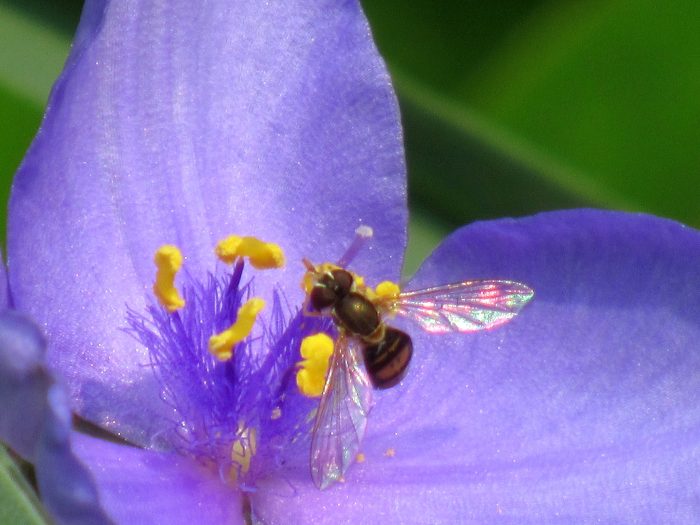
(Artist credit: Karen VandenBos)
PATRICIA NELSON
Roman Citizen Contemplates the Christian God
Let me see it as their God might.
I’ve just made a world. It gleams;
its roundness turns without complaint.
But maybe there is noise
a silent world would want:
hand-wide whistling birds,
visions for those things with eyes and wishes,
dreams with words.
A God that bends
to touch each shape that grows there:
the buds, heavy with unsaid colors;
then the purple flowers, then the yellow ones.
Patricia Nelson is a former attorney and legal writer who works with a group of Neo Modernist poets in the San Francisco Bay Area. Her newest book, Monster Monologues, is recently out from Fernwood Press.
SUSAN SHAW SAILER
The Singing Master, A Glosa
O sages standing in God’s holy fire
As in the gold mosaic of a wall,
Come from the holy fire, perne in a gyre,
And be the singing masters of my soul.
“Sailing to Byzantium,” —W. B. Yeats
At Loretto Motherhouse: I sit, wait
for Spirit to come, show me how
to lose my little ego, penetrate
the larger me nudging me now
toward something whose presence I know
through a sense beyond sense. I wait. Although
this world still draws me close—its April greens,
its birdsong mornings that thrill the air—it seems
to point beyond me, to what is higher,
O sages standing in God’s holy fire.
But humans hurting humans agonizes me.
Love can transform hate, make changes, grow
a wall around the urge to harm, stymy
that instinct. The work of love is slow,
a river calm, nourishing everyone, frees
us all to want to make the call
to welcome each individual, yet hail
community where what is good can sail
before the winds of change, a stable thrall,
as in the gold mosaic of a wall.
A robin wove her nest too near our door,
laid her eggs there though each time
we went outside we troubled her. She flustered
at us, feathers speaking volumes of our crimes.
Somehow she knew her young would be all right
and so she stayed, nestlings grown good fliers.
We’d been custodians of lives,
we clumsy humans hoping to give light.
Spirit of all that’s right, before I tire,
come from the holy fire, perne in a gyre.
I am eighty-six, perhaps near the end,
which doesn’t frighten me. Each comes alive
and then departs. While here, I tend
to what most matters, ready to arrive
at what comes next. What that is, I don’t know,
don’t need to know. I know love glimmers, glows,
beckons me to do its work, mighty flow
infusing me, strengthens my voice grown
voluble to help in fusing wholes.
Love, be the singing master of my soul.
Susan Shaw Sailer has published four volumes of poetry: On the Doorstep, The Distance Beyond Sight, The God of Roundabouts, and Ship of Light, plus two chapbooks—COAL and Bulletins from a War Zone. Sailer taught in the English Department at West Virginia University, retired, then earned a master’s degree in writing poetry. Recent poems appeared in Gyroscope Review and Thimble Literary Magazine.
PAULA SCHULZ
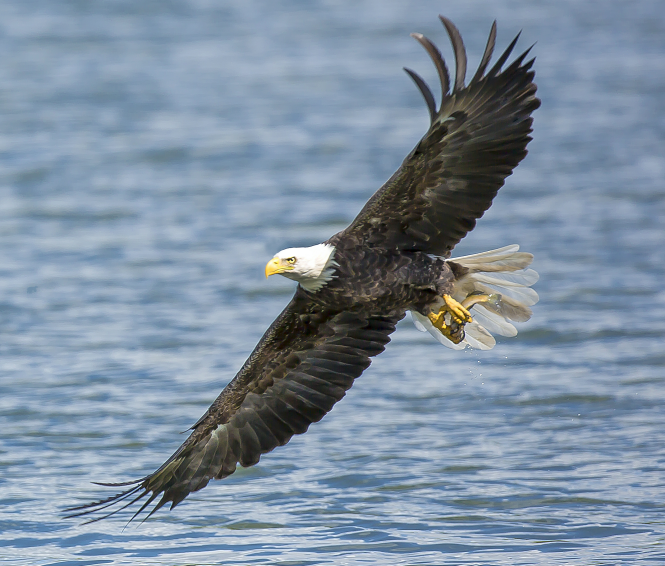
Looking for Wholeness
I bring the photo album and sit
beside her; my mother stares ahead.
In her brown eyes I see my own
and snatches of my childhood: baking cookies,
the velvet Christmas dress she sewed for me
in my seventh grade year, her long walk to work
in wind and snow—before we had a car.
And her eyes are so much more. They can’t help
but be her child eyes that kept watch through Depression
years, through World War Two years, while her parents
wore themselves out in field work, baking bread,
mending clothes, eating only vegetables
they grew so the kids could have an
occasional bit of meat. We look
at family pictures, try to recall
names. It is as though generations hold hands
and circle her with love. The memories
that slip away—we fit together like
puzzle pieces. She looks at the photos,
smiles. And for a few moments she is whole
again. Then she turns slightly and is surprised
to see me, “Oh! How good of you to come!”
And so it is.
Paula Schulz has taught pre-K through college. She lives and writes in Slinger Wisconsin, with her husband, Greg.
(Artist credit: Kurt Huebner)
SOPHIA JOAN
The Noticing of Birds
I.
my father gifted my mother
a necklace—gold and chained—
home to a bird who lived
upon my mother’s neck
a childhood symbol of love,
commitment: this gold bird
resting above the breast, a gift and
the only present to
survive their divorce
cracked.
II.
a therapist embarked on a study
pinpointing the longevity of love:
two partners arrive at a cabin
a petri dish for love to take hold
Partner A notices the bird
outside on a branch,
still and bright
when Partner B chooses to
be with the bird now
singing, they are more likely
the therapist determines:
love is the pausing,
the noticing of birds.
III.
with you came a flock—
birds with so much color, as if
you brought a flight of
coral reef to my sky
moments of life and seeing
collecting in your mind: nests
the budding flowers and
the beginnings of fruit
the starting of our mint
you bring me to my knees
in the dirt, little leaves wink
glass in the yard comes to the surface,
small moments in a game, I would otherwise
miss the way the light reflects off the lake
an illusion of rain we dance under
dry and sore and singing
noticing your birds is even greater
than what six-year-old me,
looking at her mother’s neck
gold and chained and beautiful,
imagined love to be—
soaring with your birds
I am lifted. I am whole.
I am. I am. I am.
Sophia Joan (they/she) lives, writes, and runs in the mountains. Their work can be found in Denver Quarterly, Jellyfish Review, Anti-Heroic Chic, and elsewhere. In between bursts of creativity, they are likely dancing in an aerial hoop, reading too many books at once, or brewing a new tea. Follow along with their writing journey here.
ABHA DAS SARMA
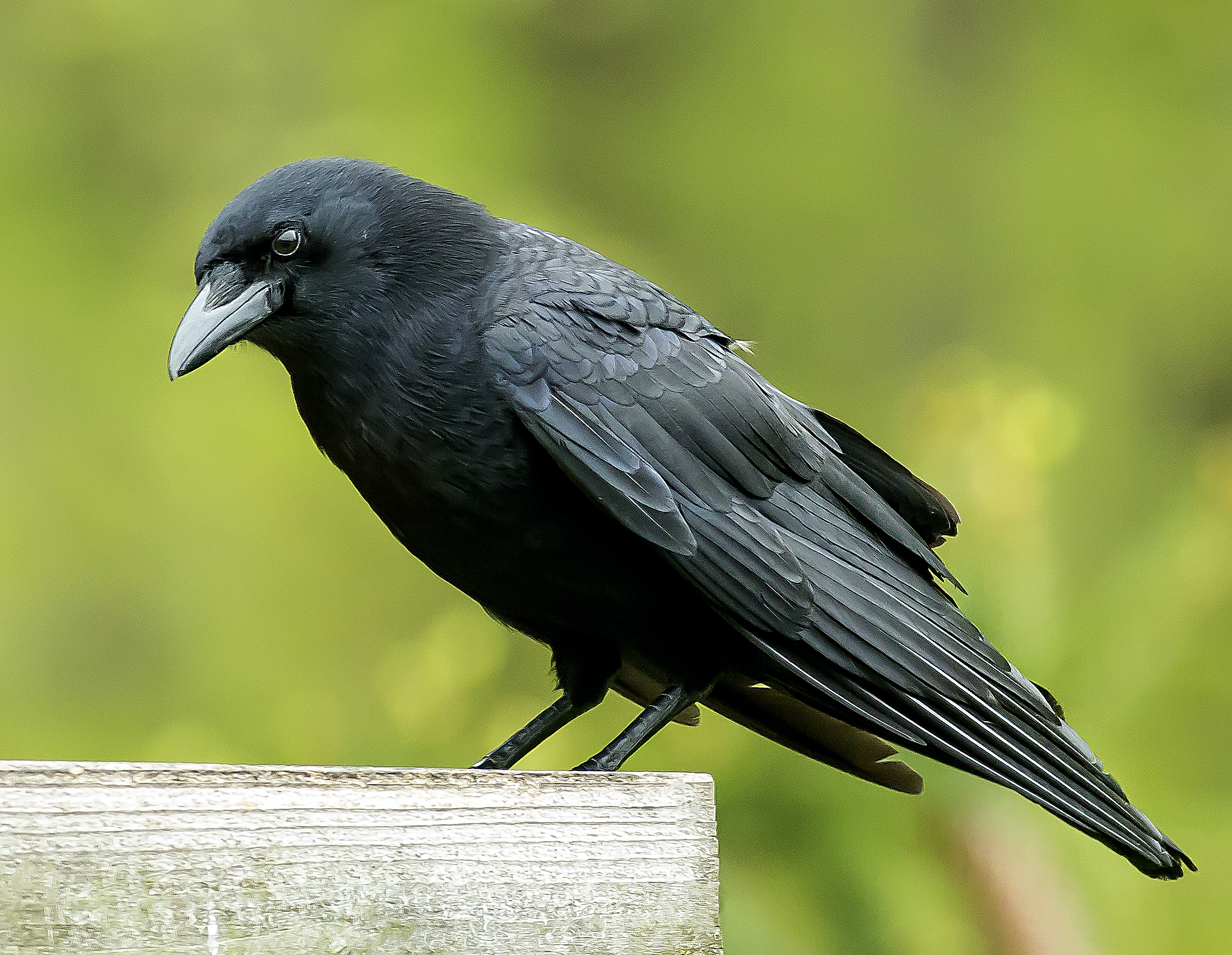
Here and in Heaven
in deep lying snow,
in sun drenched mist,
remembered as a friend
will I be
the one who loved
and fought with inner strength.
A hurrying car lights-up
the curtain I draw to a pink horizon—
five-thirty azan, six am chant,
the hawkers join the quest.
A brown headed barbet sits
on the mango tree,
olive-green plumage and stout yellow beak,
kutroo … kutroo … it sings
whole in the moment.
The neighborhood noises
upsurge
at dusk
the slow homecoming of a day
on new horizons.
Tonight, I am whole
in my chemo infused body—
in my bed
by a crescent creeping up the roof
and the musings of a faint flute.
An engineer and management consultant by profession, Abha Das Sarma enjoys writing the most. She spent her growing up years in small towns of northern India and currently lives in Bengaluru. Her poems have appeared in Muddy River Poetry Review, Verse-Virtual, The Ekphrastic Review, here, and elsewhere. She hopes to be able to walk a half marathon somewhere someday.
(Artist credit: Kurt Huebner)
CHRISTINE DALEIDEN
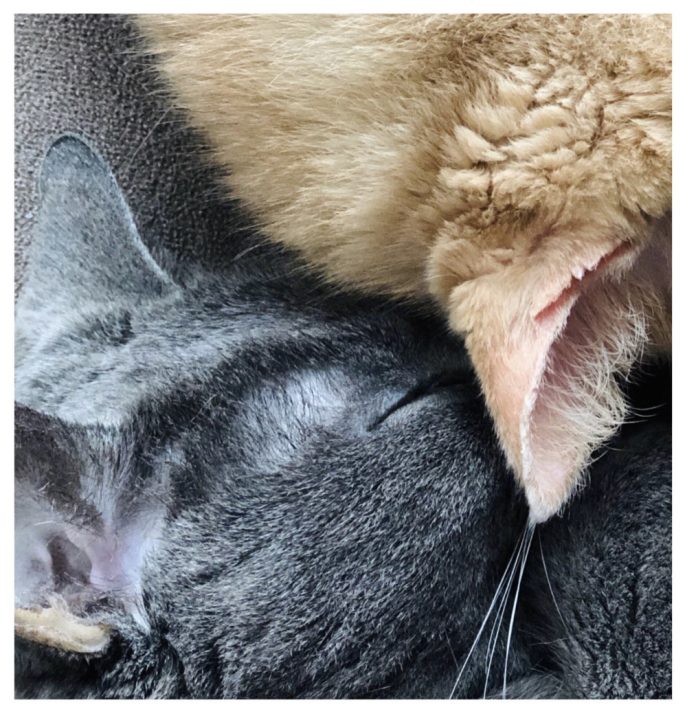
Solstice Layers
After Patricia Fargnoli’s poem “Winter Grace” with the line “… how the natural world comes to you if you go out to meet it.”
On this, the shortest day,
I walk the woods, looking …
for anything.
I see deer beds,
turkey prints,
and thousands
of seeds scattered about—
mostly box elder and burdock.
Some beech leaves
still hang on, catching
today’s golden sunlight.
I see glowing birch
with peeled ribbons
of white bark
and gnarly buckthorn
with orange tape—
reminders for me
to deal with in the spring.
I watch two crows
fly low over the long field,
then cross
to the nearby ridge
where I stand beneath
a graceful elm—
each limb
a strand
of next year’s buds.
I think about the homestead
where I grew up
and where Grandma raised
her 10 kids.
I think about her sitting
beside that huge elm
just east of the house,
as she pulled God
down from the sky
each morning.
So many years later,
I came to love
that same elm,
and was in awe
of the scarlet tanagers
that nested there.
Today, as I stand
on this ridge
by this elm,
I wonder how it has
walked all the way here
from my childhood home.
The layers compress
until the past is present.
I sense Grandma here
I feel history here
I am myself here.
Christine Daleiden is retired and enjoys watercolor, photography, and poetry. She is a member of WFOP and has strong ties to the land. She lives in Fond du Lac with her husband and their two rescues, Willow and Bert.
(Artist credit: Paula Lietz)
ARTIST BIOGRAPHIES
J LEWIS (cover artist) ~ j lewis is an amateur photographer who loves nothing more than seeing the next “perfect photo,” no matter where he is or what he is doing. He has a strong preference for outdoor photos, ranging from sweeping landscapes/seascapes to close up and intimate shots of flowers, birds, bugs, and anything else that catches his eye. https://www.amazon.com/dp/B0DT9QT5D6
KURT HUEBNER ~ Kurt Huebner shoots closeup and macrophotography in beautiful SE WI. He frequently travels throughout Wisconsin imaging his favorite subject, dragonflies and damselflies. He lives in Mukwonago, WI and is a member of the Retzer Camera Club. He has won many awards, published several articles and his images appear in several nature field guides.
KAREN VANDENBOS ~ Karen A VandenBos was born on a warm July morn in Kalamazoo, MI. She has a PhD in Holistic Health where a course in shamanism taught her to travel between two worlds. As a photographer she has captured close ups of nature and her photos have been published in Blue Heron Review. A Best of the Net nominee, her poetry has been published in multiple journals.
PAULA LIETZ ~ Paula Lietz is an outsider artist and writer of various genres published worldwide. She resides with her husband at Sandy Lake, Manitoba, Canada.
Copyright © 2026 Blue Heron Review ALL RIGHTS RESERVED
(Blue Heron Review holds first publication rights of poems. All original rights go back to individual authors/artists.)

